Showing posts with label #writingtips. Show all posts

Friday, November 1, 2019

Just Write! Trust me, it works.

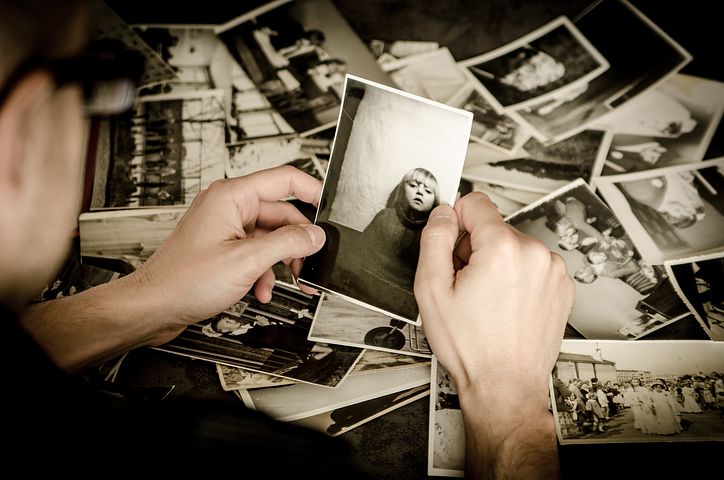
Writing a story is like taking a thousand pictures then choosing the best to display. You have to know what to focus on, what to highlight, and what order to place the pictures in to create the strongest emotional response. You also need to be willing to throw some pictures away.

Sometimes when we sit down to write, we feel like we have to get it perfect the first time. We think we must know exactly what we’re doing and how we’re going to get where we want the story to go. But that’s not how stories happen in fiction or in real life. It’s more like throwing the words on the page. There will be plenty of time to put them in the right order later.

Recently my daughter asked for my help on some essays she was working on. She felt frozen, staring at her laptop, wanting to finish before she’d actually started. I told her to just start writing. “But Mom, I don’t have time to write about something that might not end up in the essay. I just don’t have time!” 

While this may feel true, this is not how writing works. Sure, an outline and purposeful direction can help save time. But ultimately, you just need to write. Get the words on the page. Then edit in transitions, meaningful metaphors, and relevant plot details (or supporting facts, in the case of essays). And be willing to throw out your darlings. No, I don’t mean your sweet children, but your favorite turns of phrase or scenes that you’ve discovered don’t actually fit in that story. I save mine in a file linked to my current work-in-progress, just in case I discover I need them again.

The thing is, writing and editing activate different parts of your brain. Writing is creative. Editing is more analytical, though admittedly with a creative twist. Make use of this fact. Avoid constantly switching back and forth between writing and editing. You actually end up saving time if you can get into that writing zone without worrying about perfection. This can help you avoid the dreaded writer’s block, or fear of the blank page. Just write. You’ll be glad you did. Then polish it up later. That’s when the real fun begins!

Happy writing!

Monday, January 7, 2019

Resolving Not to Set Writing Goals for Myself in 2019


Every new year I set writing goals for myself.

But not this year.


I had an a-ha moment at the end of 2018.

2018 was a great year for me writing-wise: I published my second novel, I received positive reviews, the book sold pretty well.

I created specific goals for myself: finish revisions, write and revise at least one new book, do tons of school visits, get to at least one conference.

So why did my writing life feel tortured?


via GIPHY


Then it hit me: I was trying too hard.

It's a wonderful thing to have goals, but not at the expense of enjoying the trip along the way.

Last year, when I didn't meet a goal—be it word count, finished product, whatever—I'd beat myself up.

My goals, which were supposed to move me forward, actually sucked the thrill of of writing from my life.

I forgot that to really succeed at anything, there must be joy.

And for me, a Capricorn who has a tendency to want to get things done, my goals impeded the joy.


via GIPHY


This morning, I'm in the throes of final revisions to my WIP. They're due next week. And guess what? I'm having fun.

Why? Because I'm not worried about anything but the task at hand.

Instead, I trust that other books will get written, schools will be visited, stuff will happen. People will love the book or they won't.

My only focus is to love what I'm doing right now. I trust that the rest will sort itself out.

For many of you, goal setting is the thing that will propel your work to publication. I salute you.

But promise me you won't beat yourself up if you miss a deadline or don't reach your goal within a certain time frame.

Promise that you'll focus on loving your work in progress and enjoying the journey. Because that love is what will propel your writing forward.

To every writer and reader out there: I wish you a 2019 filled with magic.

It is magic that we can conjure stories from thin air.

It is magic that the stories we read let us live a thousand lives during our short time on this wonderful planet.

I have no writing goals for 2019. But something tells me I'll find a lot of magic along the way!


Friday, September 7, 2018

What's on YOUR dresser: Discovering and Revealing Character Secrets


Characters have secrets. Writers know it. Readers know it. And both are on a mission to uncover the dark (or glorious!) truths of our favorite characters. Readers find out by, well, reading. For writers, the process can be a bit more complicated.


Trait lists can be a useful way to start fleshing out your characters. Here's a great list from Writer's Digest. Once you've filled out a character fact sheet like this one, you know a lot more about your character, their personality, relationships, and motivations.

But sometimes we get stumped. Either our plots tangles up or we just can't quite fathom why a character won't do what we had carefully planned on them doing. This is a great time to dig a little deeper.


Here's a fun tool to help you with your digging. I like to call it "What's on YOUR Dresser?"


I know, what's a messy dresser got to do with your character? Well, let me show you. By the end of this exercise, you'll know tons more about your character and will have a new handy tool to use in future brainstorming! This can also be adapted to cultures and situations that have no dressers, of course. Here's how it works.

  1.  Imagery portion: Close your eyes. Imagine a dresser in your character's room. What is the dresser like? Imagine the color and style. Put yourself in that room and see what is on the dresser. Is the dresser tidy or haphazard? Let your mind drift across the dresser. What is propped against it? Is there anything hanging from the mirror? Relax and let details sift to the surface. Are the drawers open or closed? What sounds do you hear in the room? What do you smell? Is it warm or cool? What other details do these sensations bring to your mind?
  2. Writing portion: Now, write like mad, recording every detail you came up with while using the imagery portion of this exercise. Don't edit yourself. Just write. More details may surface as you record the information you've already discovered.
  3. Analysis and Brainstorming portion: This is the fun part. Now you get to look at your list (or  you could even make a sketch!) and contemplate what it means. What do these details reveal about your character's personality? What can you learn about their history, their relationships, their hobbies? What misleading clues can the dresser details provide? (Devious, I know.) Let's give it a try using the dresser pic from above.
A quick glance at this dresser (and yes, it's mine - don't judge 😆). Anyways, a quick glance at this dresser reveals a lot about personality. Let's examine it as if this were a character in a story. This dresser is cluttered, yet includes a sign that says "simplify." So there's some inherent conflict in this character already.

Several items refer to faith or God (a journal and a plaque), so this character probably espouses some sort of religious beliefs. They are also clearly a fan of Harry Potter, so she probably doesn't attend a church that opposes magic in children's stories.

There's several photos, probably family. Also a wedding pic. Is that recent? Or is it a continued celebration of a happy marriage? Or has the other spouse died? Good questions. You can see how the objects on the dresser can encourage you to dig deeper into your character and their life.

What does the folded laundry and the vacuum by the dresser tell you? Does the character live in a small space or can she just not be bothered with putting things away. (If you guessed the latter, you'd be correct! But you probably already figured that out by all the clutter on the dresser.)

Speaking of the clutter, what types of objects are they? Here's some closeups.


We already mentioned the photos. There's also love notes from two children, a card, children's books, and lots of crafts. This character is probably sentimental and creative. But there's also a pile of papers, which indicates a bit of disorganization.


You may also have noticed the two wine bottles along with the Alcoholics Anonymous Big Book (the blue one) as well as the Serenity Prayer tucked in the side of the mirror (also a part of AA). Hmmm...what could that tell us? Maybe this character loves wine or struggles with alcoholism. Or is family to an alcoholic.

This is a great example of misleading clues. There are good reasons why these objects are on my dresser. But I've never drank. And I'm not family to any alcoholics. Despite this fact, both those wine bottles, the book, and the prayer have deep meaning for me.

Situations like this are excellent examples of how objects in your character's life can completely mislead readers. Until you reveal the full truth, of course. In this case, one wine bottle I received when my grandfather died. He'd bottled his own cranberry wine when he was younger. The other was from the champagne toast my parents made when they learned Mom was pregnant with me. Yep, sentimental. The AA literature? Well, let's just say there's a ton of uses for 12 step programs and I highly recommend them.

Every object in your character's life has a history of its own. The objects you choose to include should illuminate your character or advance your story.

We could dig deeper into the clutter on my dresser - a bunch of eclipse glasses, porcelain hearts, a tiny ghost, a miniature handcrafted barge. I know what all these mean and why they are there. The same with the beads and whale tail hanging on the mirror.

But you get the point. Use this exercise and you will find untold treasures in your character's past and present. And you just might figure out why they won't do what you want! New plot avenues and potential red herrings will present themselves to your imagination, enriching your storytelling.

And don't forget, you can easily adapt this exercise to characters without dressers. What's in their backpack? Or under their bed? Or in their three-dimensional purse? Whatever you find, enjoy the process!



Wednesday, August 15, 2018

Top 5 Favorite Pieces of Writing Advice

This week our 5 year blogiversary celebration continues with some of our favorite pieces of writing advice! And if you haven't done so already pop over to our blogiversary post and enter to win free books and critiques!
What are you top five favorite pieces of writing advice?

Shari Green 

  1. First, a quote – not advice, really, but something I hold close as a children’s author: “We have been given the sacred task of making hearts large through story.” (Kate DiCamillo)
  2. Writing a first draft is making clay (so it's okay if it's messy!). Revising is sculpting something worthwhile out of that clay.
  3.  Keep showing up. (Do the work.) 
  4. So much of publishing is out of your hands. Don’t spend your energy on things that are out of your control.
  5. There’s always more to learn. 
Jamie Krakover

  1. Just because something works for someone else doesn't mean it must work for you. You do you! 
  2. You don't have to write every day to be a writer 
  3. Remove aspiring from your profile, if you write you're a writer, not an aspiring writer 
  4. Kill the filter words, it strengthens your writing. Not he heard the car horn blare, just the car horn blared. 
  5. Keep moving forward. Find good writing buddies that wont let you quit.
Tom Torre
  1. You are your own writer - it's good to be inspired by other authors, but find your own voice. That's where you'll find the most success.
  2.  Can't stop, won't stop - write when you can, as much as you can. But don't force it. Let it come when it feels the most natural. 
  3. Always keep an open mind to critiques. Your beta readers, critique partners, editors, agents, whatever, all want what's best for you and want to help you improve your craft.
  4.  KEEP READING!!! The most important part about writing is reading. 
  5. Ignore the "no's" and focus on getting that "yes" - as writers we will experience ten million no's before we get that magic yes. The yes will come, as long as you're in it for the long haul. 
  6. BONUS - never give up, never surrender

Tom Mulroy
  1. Don't compare your progress to others.
  2. Read.
  3. Give yourself time away from a project when you need to.
  4. Remember most of the work is done in revision.
  5. This is more of an industry thing that a writing thing, but all the same: Be nice to people.
  Kim Ventrella
  1. Every great book feels like a failure at some point. If you can remember that, and remember what it felt like to move past that failure, you'll likely be able to make a career as a writer.
  2. It’s about emotional connection. If readers relate to your character, then they’ll care what happens to them, and you’ve just won the biggest battle of good storytelling.
  3. Back on failure If you can embrace it (i.e. allow yourself to experiment and fail) you’ll grow much faster as a writer, as opposed to always trying to be perfect.
  4. Take every opportunity you can to remind yourself why you started writing. Push yourself to constantly rediscover that magic.
  5. Step out of the high-stakes performance zone on occasion and take time to study great books, analyze what makes them great and then experiment with what you’ve learned in your own writing.
There's our writing advice. What's some of your favorite pieces of writing advice? Let us know in the comments!


Monday, July 9, 2018

3, 2, 1, ACTION!


One of the harder things to do as a writer is to craft an action scene. It not only has to have tension, but it has to make sense to readers so they can visualize it in their head. Writing an action scene can often feel as complicated as choreographing the perfect dance.

As a writer, where do you even begin when it comes to action? How to you make the scene work for you and the story rather than making it feel like work?

Below is a list of things to consider when crafting action scenes.
  1. How long is the action? This seems trivial, but in all seriousness, the average person doesn’t have the stamina to fight or run for more than a couple minutes at a time without outside factors. If this is intended for the long haul, there’s going to have to be hiding and breaks or your characters just aren’t going to be able to keep up. On the other hand, if this is a quick brawl or chase scene then going all out might not be a big deal to your characters.
  2. What's the goal? To run? to win? to kill? to injure? something else? Think about the motivations of the characters. Why are they actually fighting or running? Let this drive how each character acts within the action. Most people don’t want to fight if they don’t have to, so if there’s an alternative look for it. If not, let there be a good reason things are progressing as they are.
  3. Increase the stakes and danger as you go. An action scene shouldn’t just fizzle out. Like the climax of a book, once you hit the peak things move quickly and so should an action sequence. Pacing in general should be quick, but again if this is a long drawn out series of events, then find the natural pause and use them to continue to increase the stakes and danger even if your characters are taking a much needed break.
  4. What are your character's strengths and weaknesses? Play to their strengths sometimes, but also amp up the tension by throwing some curveballs at them. This will not only increase the stakes, but also make the reader more invested in the action.
  5. Similarly, what are your antagonist’s strengths and weaknesses? If your main character knows this, they can use to their advantage. On the flip side, it can be used as motivation for how the antagonist approaches an action or fight scene.
  6. Make your surroundings compliment your mood or contrast. Don’t forget about your surroundings. Pulling in some of the world around the action can further add to the tension and set the tone for an action scene. Don’t be afraid to play with the setting during an action scene, just don’t take too much time to describe the floral bouquet on the counter unless someone is going to hit someone else over the head with it.
  7. Consider sentence length. Shorter sentences can often make things appear like they are happening faster. Brief periods where sentences get shorter can be another way to increase pacing and tension during an action scene. But be cautious, you don’t want to maintain one sentence length for pages on end otherwise the story sounds monotone
  8. Verb choice can also help with pacing. Did your main character turn and run or did they bolt, scamper or stumble away. Each one of those verbs has a very different intention and sets a different tone. Choose your verbs wisely to maximize the impact of the action.
  9. When in doubt, act it out. Or draw it, or animate it whatever you need to do to make it make sense. Don’t be afraid to role play, do motions or enlist some others to help you choreograph the action. Seeing the scene play out in front of you can not only help you make sense of the action but also write it more clearly for the reader to see.
  10. Don’t forget about the reactions. Every action has an equal and opposite reaction. And every action scene should have a series of reactions that come after. Those feelings and reactions are just as important if not more so than what happened during the action. The aftermath reactions are what make the action all worthwhile.

Writing action scenes can be complex, but they can also really move your story along, set the tone, increase the stakes, and help propel your characters forward. What are you favorite tips and tricks when writing action scenes?

Friday, June 29, 2018

Reptile Roundup for Middle Grade Readers and Writers


Middle grade fiction often features familiar childhood experiences - schoolyard rivalries, cuddly pets, and the fanciful creatures that lurk in young imaginations. But some of the best MG stories explore all things creepy, crawly, or scaly. Even those written for girls. It’s true, the stereotypical ten-year-old girl isn’t up to her ears in mud, catching frogs, or begging zookeepers to let her hold the snakes. But who wants to be stereotypical? 


Not me or my two daughters. We’ve put in hours chasing snakes, stuffing our pockets full of rocks, or gazing misty-eyed at anacondas in the reptile house at the zoo. So here’s a roundup of middle grade books featuring reptiles or other creepy crawlies. Following that, I’ve included tips for writing reptiles into your own stories. Enjoy!

Riveting Reptile Reads (amphibians or insects also welcome!) 

Fantastic Beasts and Where to Find Them: The Original Screenplay

Charlotte’s Web - An old classic that never fails to inspire

Harry Potter and the Chamber of Secrets - Just don’t look it in the eyes!


Snake and Lizard - Clever short stories for grades 2-3.

Tips for Writing Convincing Reptiles

  • Know your details. Snakes, for example, do not have eyelids, so you better not have your cobras blink. Reptile eggs have a leathery shell, so they’re unlikely to make a crunching sound when crushed. Here’s a great resource with some basic reptile info. If you want more details, check out this reptile wikipedia page.
  • Observe reptiles in action. Reading about their behavior is simply not enough. Visit a pet store or zoo. At the very least, watch movies featuring your preferred reptile. Notice what sounds they make, the way they move, how and what they eat. If possible, find out how it feels to touch them. Do they feel different after sitting in the hot sun? What do they smell like?
  • Consider why the creature in your story needs to be a reptile. This should not be a random choice, especially if the reptile is more than a simple element of danger. If it is a character, consider how their reptile nature influences the story. What is their place in the plot? 
Enjoy your reptilian writing and reading! 
What are some of your favorite books featuring reptiles, amphibians, or bugs?


Monday, June 4, 2018

Comparing Your Writing... to Yourself

As writers, we are constantly comparing our work to others despite being told time and time again to not do it. Comparing an early draft to someone's published book probably isn't the best ego boost, especially considering the amount of edits a published book has been through.
So when I jokingly said to a writing buddy that I was going to open up a first draft and take a look, I never expected it to be a great experience. I honestly didn't know what I would find. But what I ended up with was shocking... the biggest ego boost I didn't know that I needed.

While comparing your work to others usually has a negative impact, there is one comparison that I highly recommend you make... a comparison to yourself.
And why did this comparison work? It's a good measure of how things are going, how you're progressing as a writer. Go ahead and look back at old manuscripts or even first drafts of your current work in progress and see how things have changed. Some things you can look for:
  • Have you learned something?
  • How has your writing grown and evolved?
  • How is your worldbuilding?
  • How is your voice?
  • How's your grammar?
  • How's your plot?
  • How's your character development?
Looking at all of these items with respect to prior works can really show you how far you've come as a writer.

Take for example my first draft of the project I'm currently editing.
Note: This dates all the way back to February 2012, so try not to cringe too hard.


“Come on Kaya. Ladies first.” Troy grinned and held out the radio wave generator to me.


I rolled my eyes. “I’ll just watch for now.” Harlow’s friends are such idiots. I can’t believe they are doing this. If it weren’t for Lydia and her crush on Troy, I never would have agreed to come into the woods with my boyfriend and the goons he calls friends. The things I do for my best friend.


“You sure Kaya? It’s such a rush!” Troy waved the small box my face.


I shivered despite the blazing bonfire in front of us. “No I’m good thanks.” Ghosting was the dumbest thing kids did — the ultimate game of chicken. Harlow and his friends liked to see how long they could disrupt their tracker signal before they freaked out. If your tracker goes offline for more than five minutes, they dispatch the authorities to your last known location to check it out, hence the rush.
All right I'll spare you more than a couple paragraphs, because let's be honest, this is a complete mess. But it's a first draft so that's okay. Let's spot the issues.

  1. I started with dialogue. This isn't always bad, but can be problematic because we don't know who is speaking or what their voice is.
  2. There's a verb tense change.
  3. The voice needs some work.
  4. We don't know much about the main character off the bat or why we should follow her. Even worse we seem to know more about her friends than her.
  5. The world is a little confusing
  6. And holy info dump batman!
I'm sure I could go on and on about all the issues in this first draft, but that's why we edit.
Now let's take a look at my current draft.

Note: This is 11 major drafts and 6 years later.

    We were going to get caught. No question about it. Masking your tracker signal got you a date with the authorities at best, and at worst… I didn’t want to think about it. I wasn’t lucky enough to get away with this. I was never that lucky.

    Troy grinned and held out the radio wave generator. “Come on, Kaya. You know you want to.” The black box flirted with me like a bad boy, half thrill ride, half arrest warrant.

    I shook my head. The buzz from falling off the tracker grid—pure silence and vision devoid of popups and apps—wasn’t worth the risk of losing control. If the authorities showed up, brain probing us to check our chips for glitches would be the least of our problems.

    Troy waved the box in my face. “You sure? It’s such a rush!”

    I shivered despite the bonfire blazing in front of us. “I’m good. I don’t need a record.”

    “Wasn’t it just Yom Kippur or something? You should be good on the sin front for a while.”

    “That’s not how it works, jackass.”

    That little box was trouble. Worse than Pandora’s. My muscles tensed. At least if I refused to disrupt my tracker signal, I wouldn’t have to lie about breaking the law.

    Trekking into the woods at the edge of town to watch everyone attempt to beat the record for longest signal disruption was insanity. Why couldn’t we hang out at the fly-in theater instead? Anything other than pursuing a one-way ticket to tracker juvie.

    But they loved the thrill of tempting fate—the ultimate game of chicken. At best, they had about five minutes of interrupted tracker signals before the network alerted the authorities.

    I leaned into Harlow, and he put his arm around me. He’d never ditch me. But most of his friends wouldn’t hesitate to use me as authority bait if the agents showed up. Not if—when.


Let's dive into this draft a little deeper. The first thing you'll notice is the  core of the scene has stayed very much the same, but so much has improved around the outer shell. And the coverage of what is there has greatly expanded.


  1. There's no more random verb tense changes
  2. The language is so much stronger and more engaging.
  3. Information is sprinkled throughout in an interesting way rather than dumped in one or two paragraphs.
  4. We get a sense of who the main character is, what she wants/fears and what's at stake.
  5. We get a sneak peek into this world, but it's not fully flushed out yet (there's more to come as the reader continues on)
  6. And the voice? Well I'd say it's vastly improved. What do you think?

At any rate, I think you can see between the drafts that I've grown as a writer. And this exercise made me realize how far I've come. So if you have some time, I highly recommend you pull out an old first draft and compare it to a more recent one and see how far you've come. It might just be the writing boost you've been looking for.

And if you do this exercise let me know how it goes. Hopefully it helped you as much as it helped me.

Happy Writing!