Thursday, July 6, 2023

Interview: Sally J. Pla, Author of The Fire, The Water, and Maudie McGinn

So excited to be interviewing one of my favourite authors, Sally J. Pla!


She's the author of The Someday Birds, Stanley Will Probably Be Fine, and Benji, The Bad Day, and Me, and No World Too Big.


And she's back with a fabulous new middle grade novel: The Fire, The Water, and Maudie McGinn.


I got to read an advanced reader's copy and I can tell you this: IT IS GOOD!


What it's About

Neurodivergent Maudie is ready to spend an amazing summer with her dad, but will she find the courage to tell him a terrible secret about life with her mom and new stepdad? This contemporary novel by the award-winning author of The Someday Birds is a must-read for fans of Leslie Connor and Ali Standish.

Maudie always looks forward to the summers she spends in California with her dad. But this year, she must keep a troubling secret about her home life—one that her mom warned her never to tell. Maudie wants to confide in her dad about her stepdad's anger, but she’s scared.

When a wildfire strikes, Maudie and her dad are forced to evacuate to the beach town where he grew up. It’s another turbulent wave of change. But now, every morning, from their camper, Maudie can see surfers bobbing in the water. She desperately wants to learn, but could she ever be brave enough?

As Maudie navigates unfamiliar waters, she makes friends—and her autism no longer feels like the big deal her mom makes it out to be. But her secret is still threatening to sink her. Will Maudie find the strength to reveal the awful truth—and maybe even find some way to stay with Dad—before summer is over?


The Interview


1.     First of all, I adored this book so much! I’m a huge fan of Maudie and her dad especially, but every character in this book is three dimensional and unique. Can you tell us about the inspiration for the book?


Thank you so much, Wendy! Thank you for reading, and thank you for having me on! How an inspiration turns into a story is such a fascinating process, isn’t it? For me, usually, I start a story when I hear the voice of a new and different character in my head. But this time, it started with a setting. I live near the beach in Southern California, not far from a state campground, where many RVs and tents and trailers are parked. Walking through the campground on my many beach walks, looking at the different state license plates, hearing kids play, laugh, and cry, hearing families chatting, etc., I started imagining “what if” stories, set in this world. 


2.     I love that! Maudie goes through a lot of traumatic experiences in this book, but eventually finds her way. How hard was it to write some of those scenes?


From the safety of her summer with dad, Maudie flashes back to her life back home with her mom and new stepdad. She does NOT want to return, come August, but has been warned not to ever speak of the situation. So, all summer, she tries to figure out how to stay safely with her dad -- who’s wonderful, but in a life-crisis of his own.


Maudie’s flashback scenes of physical/emotional abuse were not hard to write. They are an everyday reality for far too many young people. They were a reality in my life, at the hands of different abusive people, when I was growing up. Certain things that happened to Maudie, also happened to me, and far worse. Mainly, my challenge, and my process, was this: Write a scene once, and let out all the feelings, just for me. Then delete it all. But while the emotions still simmered, start over in a calmer, softer way, writing to be mindful and respectful to middle-grade sensibilities. Edit, edit, edit, with young readers carefully in mind. 


3.    I love this process. It must have been both cathartic and draining all at once. Maudie's relationship with her mother is complex and troubling, but feels very real. Was it hard to write that relationship so it wasn’t completely black and white?


Such a great question. I wanted it to be clear that Maudie’s mom truly loves her. No villain worth their salt is all 100% evil. She was a teen mom, young and ignorant and with harsh parents who disowned her. To get herself and Maudie out of poverty, Maudie’s mom married someone who truly loves her and provides for their every need -- but who’s now suddenly doing daily damage to her child’s wellbeing. And she’s stuck. She can’t admit it’s happening. It would mean watching her world crumble again, maybe even going back to poverty. Plus, Maudie IS a handful sometimes, right? She’s become a bit delusional, she’s trapped herself.


4.     So true, the best villains have to believe they're doing the right thing. Maudie’s father faces financial hardships in the story, but he’s surrounded himself with good people that are there for him and for Maudie. How important was it for you to portray not only the issue of financial hardship, but to talk about the different kinds of families we can have in our lives?


“Found family” in the campground is a big part of the story, and one of its most joyous aspects. I didn’t want to downplay how grindingly hard it is when there’s financial hardship. But I did want to point out that community, and family, whatever that family looks like, is what gets us through. All the money in the world, alone, won’t do that. If there are no loved ones to raise us right, no family, no community, to support us and help us and guide us and provide all that emotional resilience, that give-and-take along the way, then we’ll be lost. 


5.     Surfing plays a huge part in this story and it is so wonderful that Maudie’s journey towards her truth starts by facing other fears. We all need mentors and she certainly finds one in Etta. Enquiring minds want to know: are you a surfer?


When I was in my early twenties, yeah, I went out a bit, but I was never good enough to feel like I could legit call myself a surfer. My husband and I were big into windsurfing for a while, but it’s been literally decades.  Now I just float around on the water. Still, I think surfing is the most beautiful, natural sport there is. You must fall in love with the ocean, read the waves, know the waves... The whole sport just swims in apt metaphors for surviving, for living! It is the perfect sport for Maudie, for helping her physically and mentally find her courage, strength, resilience, balance. 


6.     What I love about this book is that the fact that Maudie is neurodivergent is portrayed as both a difficulty for her but also a kind of super power. Letting us into Maudie’s head allows the reader to really experience both her challenges and strengths. So many kids are going to be thrilled to see themselves on the page. As someone who is neurodivergent yourself, was that easier or harder to achieve?


Way easier to achieve – Maudie’s head is my head, in many ways! And when it comes to difficulties that are also superpowers, I am so glad that came through. No weakness without strength, no crisis without opportunity, no high tide without low tide, no yin without yang, no  fire without water – and autism is also a condition of complementary contrasts. Some autism professionals divide us into “high functioning” or “low-functioning” groups, not understanding that we are ALL both high and low functioning, depending on the day, the moment , or the challenge at hand.  


Thank you for seeing and embracing this in Maudie. I hope readers will too -- and be encouraged at how much every autistic person (indeed, just plain every person) can change and strengthen and grow.


7.     Finally: please tell us more Sally J. Pla books are in the works!!!!


There are! This winter, I have a short, funny chapter book for younger readers out with HarperCollins UK’s Big Cat series – it’s about two unlikely neurodivergent friends, and it’s called Ada and Zaz. My picture book, Benji, The Bad Day, and Me, should be coming out in Spanish soon. You can look for a little novel with QuillTree/HarperCollins, Invisible Isabel, within a year or two – another autistic main character, and I hope you love her -- and I’m currently working on the novel after that: a love story set in the upper Midwest, where I lived for a long while. I won’t say any more!


Thanks Sally!


Want to learn more about Sally J. Pla and her books? Visit here. 


Friday, June 9, 2023

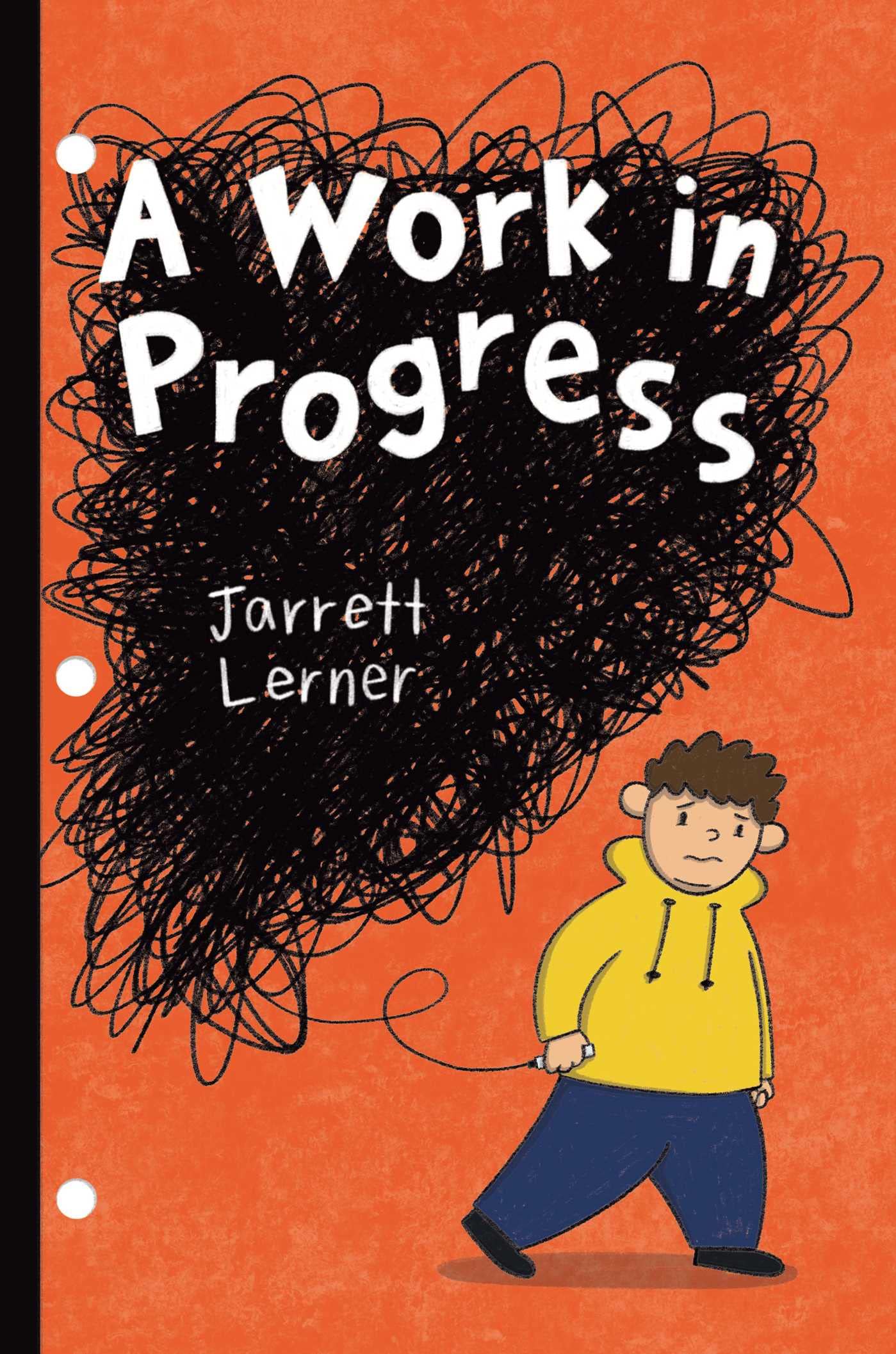
Author Interview: Jarrett Lerner, Author of A WORK IN PROGRESS


Guys, I recently had the chance to read Jarrett Lerner's new book and ask questions, and no surprise: neither he nor his new book disappoint - They are wonderful!


My Take:


This book is a profound and moving glimpse into what shame does to people; in this case, does to a young boy. Lerner’s writing and illustrations are genius, and this book is profound on so many levels. While this book deals with being overweight, the story applies to anything that makes a person feel othered and ashamed. Expect this one to earn lots of awards. It deserves it.


1.     Jarrett, you know I am a total fangirl – your work brings such joy and creativity to your readers — but A Work in Progress feels so personal.  Can you tell our readers about how you came to write the book?


Thank you! I’ve wanted to write the book for well over a decade now, and had been trying off and on every year or so. I could never get the story out of me in a way that felt authentic and complete and, you know, right. In a lot of ways, I don’t think I was ready. I think becoming a parent, understanding the importance of modeling vulnerability, the power of sharing the stories of our largest struggles – all that contributed to me finally being up for the task of finding the right words and drawings to get this story down on paper.


2.     The story begins with Will finding himself in the crosshairs of a bully — who no surprise has his own issues — and gets called out for his weight. I found this such a true moment, not just in your execution of the painful scene, but Will’s oblivion to the fact that he might be a little overweight. This is so true for kids: we’re going along in life, being loved by our parents, even being loved by other little kids unequivocally in the early elementary years, when suddenly it switches and you feel thrown to the wolves for no reason you can understand. How many times did you have to rewrite this scene? It is so viscerally painful, even as it so beautifully written.


I rewrote every word in the book more times than I can count. Every page of every book is the product of hundreds, even thousands of decisions – but this book was without a doubt the most difficult I’ve ever undertaken. This scene, though, the flashback that begins it all – I knew that had to be a focal point. It wasn’t always right there in the beginning. It was deep into the process that I realized the book, and Will’s story, needed to start with it. But it was always central. I think the hardest part about it was the framing. Giving readers a quick sense of who Will was before that moment, and then showing him who became after it, and how and why. A few years after the incident, Will compares that moment to an atom bomb going off in his life, wrecking everything in its path. The work was really making sure my readers felt every bit of that.


3.     We don’t read enough in novels about the impact shame has on kids, which is one of the reasons I love this book so much. We’ve all experienced shame in our lives, but kids are mostly not equipped to process and deal with it in an open way. How important was it to portray Will’s shame and really go there?


This is a great question, and I’m really glad you touched on this aspect of the story. I think shame – and/or the fear of experiencing shame – is one of the primary motivators for human beings. We’ll all do a whole lot to avoid embarrassment. And when we do get humiliated in some way, all bets are off when it comes to our reactions and responses. We’re liable to behave in ways we otherwise never would – maybe even in ways that are against are values and morals and best interests. I also think that all of us, to some extent, carry around and live with shame on a daily basis, and talking about it with kids can be powerful. It can be a productive path toward the opposite of shame: self-acceptance, and hopefully even self-love.


4.     It takes a long time for Will’s parents to clue in that something’s up, and I couldn’t help wondering if it’s because weight is such a taboo subject, even as overweight people are shamed mercilessly for what society deems their lack of self control. Was it hard to get the right balance in Will’s relationship with his parents?


 I didn’t want to portray Will’s parents in any way that they could be blamed for what’s happening to him. It’s way more complicated than that. It’s not that they’re not paying attention. I suppose you could say they could’ve asked more questions, sure. But tweens and teens typically aren’t the most forthcoming with answers, especially when the questions are about sensitive subjects. Part of the problem, too, is that Will puts a lot of creativity and efforts into hiding what he’s doing. He doesn’t want to be found out, and he’s a smart kid. He deploys those brains to deflect unwanted attention from his parents. I think, heartbreakingly, that everyone has something they’re dealing with. Something that troubles them, that can make what might otherwise be an okay or even a good day not so good. But a lot of that suffering happens silently. A lot of it hides in plain sight. I wanted to show that. And I hope I did it in a way that doesn’t leave my readers despondent, but instead compels them to be gentler with those around them, and to maybe, genuinely, ask each other how they’re doing once in a while. 


5.     I’m not going to lie: I cried multiple times reading this book, and not just because of how beautifully the story is written, but also how beautifully you’ve illustrated Will’s story. The pain jumps off the page because of your illustrations, which is amazing. Did you always intend for this to be a graphic novel?


I mentioned before how many attempts I made to get this story onto paper, and it wasn’t until I landed on this idea of framing it as Will’s notebook that it really started coming in a way that felt right. The book is modeled after my own notebooks that I kept when I was Will’s age. They were a chaotic collage of free verse (which I happened upon without even knowing there was a term for it, just because it allowed me to get my thoughts and feelings and ideas out onto the page faster, without worrying about complete or proper sentences) and drawings of varying completeness. The form was perfect for me and this story for a number of reasons, one being that I always like to use words and pictures if I’m able (it’s how I think, and how I most naturally create), and also because I think it helped make Will’s story as raw and true and potent as possible. Will doesn’t know anyone’s reading his notebook. He’s sharing his story incidentally. And I think, because of this, it lends a certain power to everything. Because of this, an enormous knotty scribble means something. It’s not performative. He doesn’t know he’s sharing it with anyone. He’s just trying to get it out of him, for some sort of release or relief. The form sort of strips away any barriers between us and Will’s naked thoughts and feelings. If he was narrating in prose, if there weren’t the notebook lines – basically, if the story was told in any other way – I don’t think it would hit anywhere near as hard as it does.


6.     I know this book is so personal for you, but you should be so proud, because a lot of kids are going to feel seen, whatever their issue is, and a lot of discussions and empathy are going to be created. There’s going to be some pretty powerful school trips and letters about this book! Are you ready for that? (Pretty sure I know the answer!)


It’s begun! I just returned from a tour surrounding the book’s release. I’m fortunate to have now shared and discussed it with thousands of kids and adults. It was terrifying, at first – but after just a couple sessions, all that fell away, and it just felt good. Really, really good. Getting up in front of people and being vulnerable, talking about your toughest, darkest times – it is, perhaps paradoxically, extremely empowering. And the kids have responded so strongly to it. At my launch part for the book, I asked a friend of mine – the great Lynda Mullaly Hunt – if she had any advice for me, as I was starting my school visits for the book the very next day and, as I mentioned, I was terrified. She told me to get up on stage and be as honest and vulnerable as I could possibly be. Be a wide-open book. She told me the kids would see that, and respect it, and tune in, and even reciprocate. And she was right. I’ve been so impressed and delighted by how willing, even eagerkids are to discuss all the issues broached in the book. It’s been remarkable, and yeah – I’m very proud and grateful I can serve as a role model for these kids, and I hope sharing my story, and Will’s story, helps ensure that their stories never get as dark or troubled as ours. 


7.     What’s next?


A summer of rest and relaxation! When I’m not working to hit my looming deadlines, that is. But I wouldn’t have it any other way. I’m fortunate to have a whole bunch of books lined up for the coming years. I can’t wait to share.


Thanks Jarrett – both for writing an amazing novel that is going to help and support so many kids and for being such an ally for kids everywhere! Bravo!


want to learn more about Jarrett and his book? Click here.

Monday, May 22, 2023

Author Interview: Casey Lyall, Author of Gnome is Where Your Heart Is


Another great interview about a truly fabulous and unique book!


I got a chance to read an advanced reader's copy of this book and I was hooked from the first page all the way to the end!


ABOUT THE BOOK:


Lemon Peabody is certain that aliens visited Grandpa Walt thirty years ago, but she's running out of time to prove it before he forgets his best story. This humorous and tenderhearted story about family, friendship, and always believing in yourself is for fans of Greg van Eekhout, Stuart Gibbs, and Hour of the Bees.

Lemon Peabody loves spending time with Grandpa Walt. Even though he has been diagnosed with Alzheimer’s and moved to an assisted living facility, he’s still the same funny, loving grandpa he’s always been. One of Grandpa’s claims to fame is his story about meeting an alien years ago—and that it looked like a garden gnome. Ever since, it’s been something of a town-wide joke, and the cause of a rift between Grandpa and Lemon’s dad. Lemon is determined to find those extraterrestrial gnomes and vindicate Grandpa Walt—while Grandpa can still remember it.

Late one night, after seeing the flash of a spaceship during a storm, Lemon enlists the help of two friends to find out what might have crashed in the woods. But then the aliens find her, and nothing goes the way she expected. Lemon is sure she can convince the aliens to fix Grandpa Walt’s memory and bring back the grandpa she misses so much for good. But the aliens are dealing with problems of their own. With a little creativity and compassion, maybe they can all help one another.


THE INTERVIEW:

1)   In the introduction to Gnome is Where Your Heart Is, you tell a delightful story about how the gnomes just "snuck up on you”, as did Walt and Lemon, two of the many fantastic characters that appear in the book. Clearly, your subconscious was sending you messages, because the idea of aliens fits so perfectly with someone suffering from Alzheimer’s – it often feels like something otherworldly has taken over our loved one’s body and it’s difficult for us to know if what they are telling us is grounded in reality. How soon did you realize that Walt and Lemon and the aliens had a heart story to tell?


The story started with the idea of garden gnome aliens and as soon as I started asking those questions that you always dive into when you’re trying to break down an idea — Why garden gnome aliens? Why are they here? Who are they here for? What’s the problem? — that was when Lemon entered the picture and with Lemon came Walt and the pieces started to fall into place and I said “Ah. This is the story.”


2)    Lemon struggles with being disappointed in her father, just as her father struggles with being disappointed with Walt. At times it feels like these dysfunctional relationships are bred in the bone. How important was it for you to really showcase the pain this family has experienced after Walt’s first contact?


It wasn’t a story that I set out to tell, but one that evolved as I got to know the characters. It became really clear that this was the path they’d travelled and I wanted to do my best to give justice to their story, especially the ways that they work on healing.


3)    Belief plays a huge role in the book, and we see some characters who are more open to believing in advance of proof (Lemon’s friends Marlo and Rachel) and those who simply cannot believe unless they see something with their own eyes (Lemon’s dad). How easy is it for you to believe in things?


I’ve always been big on the power of belief and being open to things. And if we want to specifically talk about believing in aliens? I just think that statistically, there has to be someone else out there. I’m definitely more of a Mulder than a Scully, haha!


4)    The beginning of the first chapter that alien Gnedley appears in totally cracked me up. I could almost hear Bruce Willis muttering under his breath. It turns out the aliens have their own trust issues. When did you decide that the aliens’ side of the story would be part adventure/part finding out who you can count on?


That storyline kind of evolved naturally. I wanted Gnedley to have something as interesting to grapple with as Lemon’s storyline was for her. I liked the parallels of both of them going on this adventure and finding out that not everything is what they thought it was. And that callback to the power of belief and trust for both of them.


5)    Lemon believes blindly, thanks to her total belief in Walt, but the book does a wonderful job of pointing out the cost of blind faith – both for the humans and for the aliens. Was that an issue you wanted to explore early on or did it just evolve organically?


That was another part of the story that definitely came together as I wrote. My focus is always on character over theme. I try to immerse myself in the character and let them tell their story how it needs to be told. Any theme that comes out of it is often a by-product of being true to the character. I just to my best to listen to them!


6)    Finally: An alien spaceship lands in your backyard tomorrow — are you getting on?


Oh, man – I’d have to really think about it! I’d definitely want to check it out and poke around, but I also don’t think I’d be ready to leave everyone and go on a space adventure and I feel like that would totally accidentally happen to me. Maybe I’d settle for smushing my face against the window and seeing what I could see…


Thank you, Casey! Loved the book so much!  


WANT TO LEARN MORE ABOUT CASEY LYALL AND HER OTHER FABULOUS BOOKS?


CLICK HERE. 

Monday, March 27, 2023

Author Interview: Jaime Berry, author of HEART FINDS


Heart Finds is such a fabulous book!


As soon as I finished the book - which I read in one sitting because it was such a good book - I knew I needed to talk about with author Jaime Berry!

And now of course I need to go back and read her debut novel, HOPE SPRINGS!


About The Book:


Eleven-year-old Mabel Cunningham is a quiet loner who only feels free to be herself when she's "extreme treasure hunting" with her grampa—much to her perfectionist mother's disapproval. Nothing excites Mabel more than discovering a heart find, an item that calls to her heart, and the maybes that come along with it.

But when her friendships start to crumble and her grampa suffers a stroke, Mabel quickly learns that real-life maybes are harder to handle than imagined ones. Desperate to change things back to the way they were, Mabel devises a plan that she believes will fix everything. Except bringing her plan to fruition means lying to her grampa and disappointing her mother.

Will Mabel learn that letting go of the past doesn’t mean letting go of her grampa and that embracing the future might be one of her most important heart finds yet?


The Interview


1.     Hi Jaime! Congratulations on writing such a fantastic book! You had me hooked from the very first line: “My grampa always says the best treasures are the ones that hide in plain sight.” It’s a genius first line, because it lays out exactly what your story is about, both thematically and plot-wise! Was it the book’s first line from the get-go?


Thank you so much, Wendy! That first line came about after many, many revisions and I’m so happy it drew you in. First lines are so hard, aren’t they? And finding one that hinted at the theme and my main character’s journey took several tries. I loved my original first line, but it wasn’t doing the work a really good opening line needs to do, so I think it’s now buried in the beginning of Chapter 3. But as Mabel learns some changes are necessary and sometimes even better in the end.


2.     I love the term heart finds — as soon as I read it, it resonated with me: that feeling of connection with a person, a place or thing that is so visceral it can’t be denied. But you play with the theme beautifully in the book, because sometimes we don’t recognize something in front of us as being a heart find straight away. Has that been your experience, too?


Absolutely, yes. In the first draft I was calling them “amazing finds” and it just wasn’t specific enough. I have my editor, Sam Gentry, to thank for pushing me to really think about what I was trying to get across—that sense of connection that resonates in one’s heart. The main character, Mabel, is sort of a lonely kid, and I wanted that term “heart finds” to hint at what she was really searching for, more connections that made her heart hum, and not just to places or things, but most especially to people who loved her exactly as she is.


3.     The main character Mabel is caught in the middle between her single parent mom and her beloved grandfather at the same time she is navigating the politics of middle school. Mabel is a quirky girl, an old soul, who you know is going to grow up to be the most interesting person in the room. But those kinds of kids often struggle in middle school and high school. How challenging was it to write the truth about a girl who colors outside the lines?


Having been a kid who often didn’t fit in and didn’t fully understand the social complexities of middle school, I feel Mabel and I might be kindred spirits. Getting to know my main character is normally something I figure out as I go, but Mabel came to me fairly easily. I felt I knew her well before I even started writing, but I found feeling that close to a character to be a bit tricky. There were certain scenes that were difficult to write! I almost felt guilty creating moments that I knew would hurt her, but also were necessary to force her growth and push her toward finding people who appreciated her uniqueness. 


4.     When Grampa gets sick, Mabel’s world is up-ended, a common experience for kids the age of your readers. Your write so movingly about this – did you go through something similar when you were young?


I was very close to my grandmother—this book is dedicated to her. She was unruly, funny, creative, and sure of herself. When we spent time together, that self-assuredness was contagious. She made me feel like I was her absolute favorite person in the whole world, and she was definitely mine. She passed away when I was a teenager and it was really difficult to figure out how to find my way back to that feeling without her. I think it’s also worth mentioning that I wrote a majority of Mabel’s story during the height of the pandemic—another time in my life when I felt, along with many others I imagine, completely off balance and uncertain of what the future held. I hope people who read the book come away with the message that when we’re knocked off our feet as Mabel is, it’s okay to struggle and make mistakes as we get back up.


5.     Mabel’s relationship with her mother evolves during the book, and we come to have a tremendous amount of sympathy for the character. While Mabel is caught between her mother and her grandfather, we realize the unfair position they’ve both put her in at times. It’s not something you see enough of in books, how kids are often victims of issues between parents and grandparents. Was that important for you to portray this?


You’re right, it’s not something we see very often in middle grade. In my experience, even the best of family relationships is complicated, and kids are often caught in the middle. Through the course of the book Mabel gains a deeper understanding of her mother’s relationship with Grampa and she learns that she’s misjudged them both a bit—Grampa isn’t entirely blameless, and her mom isn’t entirely to blame. One of the things Mabel says about scavenging for finds with Grampa is that it can be hard to figure out what to hold on to and what to let go—relationships can be that way too in a sense. But by the end of the book, I think they’ve all figured out a way to let go of a few things, to do a better job loving each other, and come to understand that maybe their most valuable heart finds are one another.


6.     When can we expect another Jaime Berry book?


I wish I knew! I’ve just finished up a draft of another tug-at-your-heart, contemporary middle grade—it’s still far away from having a specific publication date. But I feel so very grateful and lucky to get to write books for kids and can’t wait to get the next one into reader’s hands! Thank you so much for this opportunity to chat about HEART FINDS.


You are so welcome!


Want to learn more about Jaime Berry? Visit her beautiful website here!

Thursday, December 15, 2022

Review: THE VERY DANGEROUS SISTERS OF INDIGO MCCLOUD by John Hearne


Confession: the author had me as soon as I read the title. While Indigo spells his last name differently than mine — McCloud versus McLeod — our last names are the same. So I had to learn all about his horrible sisters!


Description

Indigo McCloud’s sister Peaches is every adult's favourite child: pretty, golden-haired, polite and charming. But the children of Blunt know better: Peaches and her three sisters are a gang of bullies who will stop at nothing to get their way.

This is the story of Indigo’s battle to stop his sisters. Leaping across the rooftops of Blunt, he tries to keep one step ahead of their wicked schemes –but he has to tangle with 437 hungry geese, an avalanche of toilets, curry farts, bungling policemen, vicious eels, a pig in a witch's hat, a three legged spider with a toilet brush and a dangerous villain in odd socks …


What I Thought


This book is HYSTERICAL. And sooooo dark. 


The story begins with the sisters terrorizing a neighbour children who is unwilling to do their bidding. 


Her punishment by the sisters is cruel, but also funny, a theme repeated again and again in the story.


But Indigo's had enough.


And when new neighbour Mandy Tripe and her family are terrorized by his sisters, he's had enough.


Cue an elaborate revenge plot where Peaches and her sisters get their comeuppance and Indigo and the neighbourhood children finally find peace.


Filled with cheeky humour and some very gross experiences, kids are going to lap this book up!


John Hearne has written a book worthy of the Roald Dahl canon.


Publishes February 7, 2023 by Little Island Books.


Want to learn more about the author? Click here.