Showing posts with label #MGBooks. Show all posts

Monday, October 30, 2023

Interview with Katie Kennedy, Author of THE PRESIDENTS DECODED

 We haven't done non-fiction lately, so thought Katie Kennedy's new book, THE PRESIDENT'S DECODED would be a great book to read and talk about! I enjoyed the book and immensely and think you and the kids in your life will, too!


About the book:


Ever wonder what the President does? Meet the 45* people who have held the job in this important book that showcases how they each led the country in their time—and features their own thoughts and words through their documents, letters, diaries, speeches and so much more.

Some call it the most important job in the world. It's certainly the most powerful. And it's one that every citizen needs to know about because we're the ones who vote to put a president in office. Lively, informative, filled with firsts and facts, big ideas and compelling anecdotes, 
The Presidents Decoded, is a richly layered guide to the leaders who have shaped our nation.

Featuring over 125 primary sources--including documents, speeches, letters, executive orders and diaries--each leader's time in office is broken down and explained to show the what, how and why of our leaders' thoughts, decisions and policies. Familiar documents like the preamble of the Declaration of Independence, The Emancipation Proclamation, and The Fugitive Slave Act — the part of the Compromise of 1850 that set the country on a path to Civil War — are included. But there's also George Washington’s letter to Martha as he learns that he’s been chosen to be the General of the Continental Army, a letter to Franklin D. Roosevelt from a desperate family during the Great Depression, a letter from baseball legend Jackie Robinson urging John F. Kennedy to do more for civil rights, and the Executive Order limiting the hours of the federal work day, and so many more. Full-color illustrations bring each president and their time in office to life on the page in their career-defining moments as history marches forward and changes the job — and our way of life — through inventions like the camera, the telephone, the first metal detector, services like the Navy and the Red Cross, and the rise of social media platforms like Twitter.

As she did in 
The Constitution Decoded, Katie Kennedy shines a light on American History, this time through the lens of the leaders who shaped our nation.

(*Very clever of you to catch this! the number is off by 1 because Grover Cleveland was the 22nd and the 24th president!)


The Interview:

1.     First of all, congratulations on writing such an interesting book! How long did it take you to do the research before you even started writing?


Thanks! Research took years, if you count the time I spent in college and teaching and reading—I already had a pretty good background when the publisher suggested this project. But specifically, it took about four months, I think. I was reading the Congressional Record at 2:00 a.m.! I had a great time writing this book, and the editor is fun, so we had some entertaining email threads. 


2.     What gave you the idea to include excerpts from historical documents and then decode them for your readers? 


        I thought that was the great thing about the first book we did, The Constitution Decoded—it gives readers the tools to decipher the document. I wanted this book to be like that—to give kids primary sources that they could evaluate themselves. And going to the primary sources is an important concept. How do we know what we know? In an age of disinformation, that’s a vital part of education. 


3.     The media would like us to think that things have only gotten wonky in Washington lately, but it’s clear from the beginning that there has always been in-fighting and significant disagreements between and within parties. How important was it for you to show that? 


        I wasn’t trying to make political points, so in that sense, it wasn’t at all. But I was trying to tell the whole story as best we could in the space available, and you’re right, that absolutely includes political in-fighting and sniping. I mean, John Tyler got kicked out of his own party, and Andrew Jackson’s campaign accused John Quincy Adams of wearing silk underpants! That’s low. 


4.     I love how well you placed each president within the historical context of their times. I was shocked to learn about some of Woodrow Wilson’s beliefs, but impressed to learn he was willing to step down immediately if he lost the election if it was better for the country to do so. How did you decide what was the most important things to include for each president? 


        Oh, it was so hard! Because of course I wanted to include the significant issues—to give readers who are encountering, say, Benjamin Harrison for the first time, some idea of who he was and what he did. So I had to provide a general overview and also highlight what was most significant in each president’s administration. But at the same time, I wanted to go beyond the usual documents and show something a little different, or go a little deeper. An example of that would be the letter in which then-Vice President John Adams referred to himself as “Daddy Vice.”


5.     After all your research, did you find yourself with a preference for any specific president over all others? 


        Like virtually all historians, I rank Abraham Lincoln as our best president, but I think Ulysses S. Grant is greatly underrated. Eisenhower is, too, although not as much. James Buchanan is usually ranked very low, but that’s probably still too high. 


No matter how each performed as president, though, they were wrenchingly human. I think of Calvin Coolidge’s helplessness as he watched his son die because of a blister he got playing tennis. Or James Monroe’s courage in combat during the American Revolution, when he was shot and seriously wounded. Theodore Roosevelt’s agony when his wife and mother died the same day. Or John F. Kennedy towing an injured comrade three miles through the Pacific Ocean during WWII, the man’s lifejacket strap clamped in his teeth. Whatever you think of them as presidents, they were also people with remarkable stories. 


6.     Finally, your book ends with a poignant reminder that the future of the United States lies in the hands of its current and future voters. How do you hope teachers and students use this book to make themselves ready to pick up the democratic torch when their time comes to vote?


I hope that readers think about the gravity of the decision we make in the voting booth. No president gets to choose the challenges they face. So every president—and by extension, every presidential candidate—has to be a mature person with the experience, qualifications, and judgment that allow them to shepherd the country safely for four years. 


And I hope readers think about how president after president passed off the office to their successor, even after bitterly contested campaigns. The peaceful transfer of power is not only one of the things that makes America great, it’s one of the things that makes Americans safe. Political stability and governmental competence allow the economy and arts to flourish. If that ever collapses, the loss will be staggering.


7.     You’ve decoded the Constitution and the presidents. Anything else you’re dying to decode? 


        Yes! We’re just starting a book on voting that will be a good companion to THE CONSTITUTION DECODED and THE PRESIDENTS DECODED. I hope when young readers see how hard people have struggled for the right to vote, they’ll look forward to their chance to participate in, and protect, our democracy. 


Thank you, Katie!

Thank you!


Want to learn more about Katie Kennedy and her books? Click here!  

Monday, September 18, 2023

Interview with Elisa Stone Leahy, Author of Tethered to Other Stars

Tethered to Other Stars


It was such a privilege to read this wonderful book and I think you will find Elisa's answers inspiring and revelatory.


About the Book:

Perfect for fans of Efrén Divided and A Good Kind of Trouble, this luminous middle grade debut follows a tween girl navigating the devastating impact of ICE’s looming presence on her family and community.

Seventh grader Wendy Toledo knows that black holes and immigration police have one thing in common: they can both make things disappear without a trace. When her family moves to a new all-American neighborhood, Wendy knows the plan: keep her head down, build a telescope that will win the science fair, and stay on her family’s safe orbit.

But that’s easier said than done when there’s a woman hiding out from ICE agents in the church across the alley—and making Wendy’s parents very nervous.

As bullying at school threatens Wendy’s friendships and her hopes for the science fair, and her family’s secrets start to unravel, Wendy finds herself caught in the middle of far too many gravitational pulls. When someone she loves is detained by ICE, Wendy must find the courage to set her own orbit—and maybe shift the paths of everyone around her.

First of all: What an amazing book!  I loved it and all the characters so much! And I learned so much!  So many questions:


The Interview


  1. Can you share what made you write about the refugee crisis in the United States (which, really, is happening all around the world?)


As a Peruvian-American living in the Midwest, I’ve gotten to know many refugees and been involved in immigration activism. I am also a documentary filmmaker but I found that the most vulnerable people cannot share their stories on screen. I cannot put people on camera to share what they’ve been through when the perpetrators are still out there, searching for them. I have friends who ran from gangs in El Salvador, who left abusive relationships in Mexico, or who have been mistreated by ICE agents here in the US. Those stories are not safe for my friends to share in a documentary film, but I can write it into fiction. Children’s literature has an immense capacity to take distant experiences and draw them closer. Many in this country, adults and kids alike, have a very distant concept of what the immigrant experience is like. I hope that by telling some of these stories through fiction for middle grade, readers may draw a bit closer to comprehending that reality.


  1. The main character Wendy (nice name choice by the way!) is a budding scientist whose family has just moved again after raids in their previous community. She and her brother suspect that one of their parents might not have the proper documentation to allow them to stay in the country, but in many ways, are too afraid to ask. There’s a tremendous amount of love and tension in the family – how difficult was that to write?


Tension is always difficult to write, but particularly in middle grade. Middle schoolers are often navigating that transition between the safety of their home and their place in the unknown world outside those walls. As kids expand their understanding of the world beyond the scope of their own family, their values and beliefs begin to take on a new shape. Writing to that age where identity is still forming means questioning family members but not completely throwing off that safety net. Wendy has to see her parents as fallible, yet still trust them. She has to question their choices, but know that they love her wholeheartedly. I gave some of that questioning to her older brother, who is developmentally further along in creating his own identity. But Wendy, like other kids her age, has to find her own path.


  1. One of the difficulties of trying to blend in is that it makes it almost impossible to make waves when you see things that aren’t right. Wendy has some friends at school who are much more forthright when they see racist and other bad behaviours. You did a wonderful job of showcasing the subtle and not-so-subtle ways bigotry manifests itself. How important was it to show kids how insidious that kind of behaviour can be.


When we only hear about the most egregious examples of discrimination, it is easy to think we would speak out. Standing up to racism seems obvious. But most bigotry is subtle and responding to that can be hard. I wanted kids to see examples that are complicated and show how even things that seem small can be damaging. Most kids have a strong sense of justice but taking a stand is not easy. For people who are being targeted, standing up can even make things worse. It was important to me to point out that vulnerable people may have valid reasons to not be at the forefront of the fight, and to show how others can be advocates for justice.


  1. I love the parallel story of Luz, who has sought sanctuary in a local church so she can’t be deported. I find the idea of sanctuary so moving, since really, isn’t that what we all search for in life? This plotline was a wonderful way to politicize Wendy’s brother, Tom. How much research did you have to do around similar cases?


Much of my research came through lived experience in immigration activism. My friend Edith Espinal lived in sanctuary for over 3 years in a church to avoid a deportation order. She took her fight to the news, to the presidential candidates and to the front page of the New York Times. I was part of her team when we traveled to DC to lobby for her and others in sanctuary. We led letter-writing campaigns and petition signings. Edith became the face of the sanctuary movement. My partner and I produced a documentary, A Shelter for Edith, about her story and my book is dedicated to her. But even with all my experience, I did plenty of research. Immigration law is messy and no refugee experience is the same. My book is set in Columbus, Ohio in 2018, during the year that Edith was living in sanctuary. Sanctuary is a concept that I have never seen in contemporary fiction, so it was critically important that I present an authentic experience that fit that time and place.


  1. Wendy standing up for herself actually helps her parents realize the cost of staying hidden. But there are consequences to speaking up. Did you know from the beginning how the book was going to end or did some things change in the writing?


When I began writing this book, my friend Edith was still living in sanctuary. I wrote all the hope I had for her into Luz’s story. I wrote my passion for justice into Etta’s headstrong, big-hearted zeal. I wrote the grief I felt for another friend whose husband was taken by ICE into the hurt Tom’s family felt. I knew from the beginning that I wanted Wendy and her family to be okay and together at the end. But I also knew that there is no easy resolution to the complexities of immigration law. The book opens with Wendy’s family moving into a house that feels unstable and unsafe, mimicking the societal structures that often feel threatening to refugees. The book ends with Wendy’s family together, healing and in a home that is now safe and welcoming. But you’ll notice that the legal questions are not fully resolved and Luz is still living in sanctuary. There is hope, and a path forward, but nothing is certain. True change can only happen with policy change and democratic action. My friend Edith is now living in her own home, thanks to a democratic vote that changed the administration. In the book, Luz’s story is open-ended as a reminder that our actions decide the future.


  1. Secrets are wreaking havoc in Wendy’s family. Wendy’s parents come from places where the only way to survive is to risk the long and dangerous journey to another country, one where they know they may not be welcomed. Was it hard to write how that trauma impacted them and then ultimately their children?


I have dual citizenship, so I have never had to grapple with the realities of immigration for myself. But this book is shaped by the experiences of many, many friends. Telling this story is nothing compared to what they have lived through. I have listened to an ICE officer mock and belittle my friend for misunderstanding the English instructions he was given at his check-in. I have called a friend from the ICE office to tell her that her husband was just taken into custody by an ICE officer who referred to distraught immigrants being deported as “crybabies.” I’ve had parents ask me to help them find paperwork to sign custody of their 5-year-old over to relatives in the event that both of them were deported. And I’ve sat for hours with friends, documenting the darkest moments of their lives for their refugee claims, both of us in tears. Was this hard to write? Yes. But weaving their pieces of truth into this work of fiction was the best way I knew to tell their stories. 


  1. I so hope every school and library gets a copy of this book, because the refugee situation is only going to get worse as the climate crisis intensifies. What do you hope your readers take away from this story?


ICE has done a remarkable job of creating a culture of fear that terrifies families. For kids growing up with that reality, there is often no room to acknowledge that fear and its damaging effects. I wanted to give those kids a place to see themselves and I wanted other kids to get a sense of that suffocating fear. As a child, I vividly remember reading books about WWII and what it was like for the Jewish people living in that environment. Those stories made me a more empathetic person and shaped my view of justice and systems of power. Our kids need to hear these stories.


  1. Finally – What’s next?


If you loved Wendy and her friends, then I have some great news! The second book, which follows one of Wendy’s new friends from school, comes out next Fall. The title reveal and description are coming soon! It takes place just a few weeks after Tethered to Other Stars. I can’t give too much away, but there will be comics, secrets, a drag queen storytime, a sweet crush and library shenanigans. Also a glitter cat. Stay tuned for more! And if you’d like to take a personality quiz to see which of my characters you are most like, check out my website!


Want to know more about Elisa? Click here!

Also, between now and October 2nd, you can enter a goodreads contest to win your own copy! Click here!

THANK YOU ELISA!!!


Friday, June 9, 2023

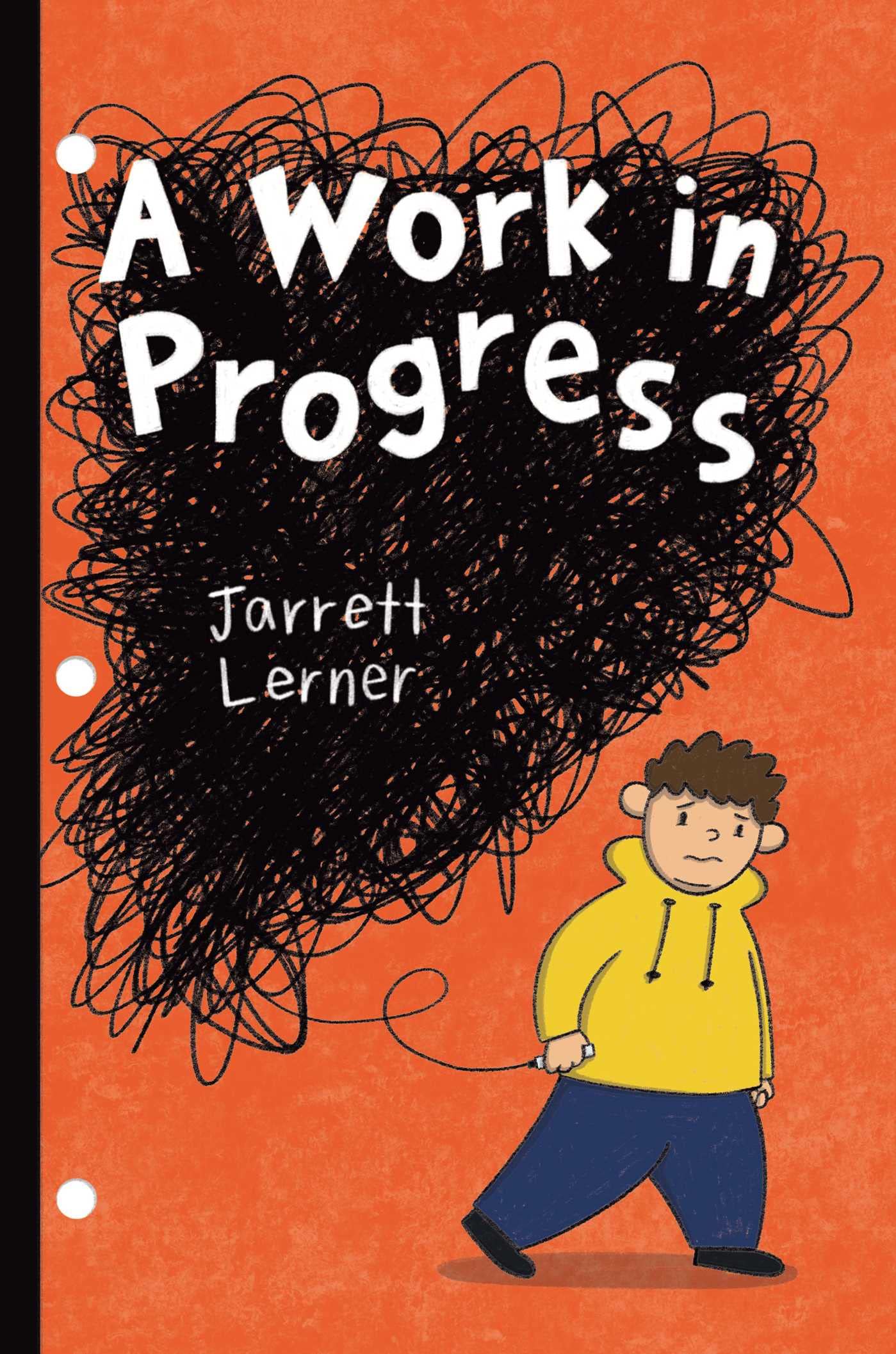
Author Interview: Jarrett Lerner, Author of A WORK IN PROGRESS


Guys, I recently had the chance to read Jarrett Lerner's new book and ask questions, and no surprise: neither he nor his new book disappoint - They are wonderful!


My Take:


This book is a profound and moving glimpse into what shame does to people; in this case, does to a young boy. Lerner’s writing and illustrations are genius, and this book is profound on so many levels. While this book deals with being overweight, the story applies to anything that makes a person feel othered and ashamed. Expect this one to earn lots of awards. It deserves it.


1.     Jarrett, you know I am a total fangirl – your work brings such joy and creativity to your readers — but A Work in Progress feels so personal.  Can you tell our readers about how you came to write the book?


Thank you! I’ve wanted to write the book for well over a decade now, and had been trying off and on every year or so. I could never get the story out of me in a way that felt authentic and complete and, you know, right. In a lot of ways, I don’t think I was ready. I think becoming a parent, understanding the importance of modeling vulnerability, the power of sharing the stories of our largest struggles – all that contributed to me finally being up for the task of finding the right words and drawings to get this story down on paper.


2.     The story begins with Will finding himself in the crosshairs of a bully — who no surprise has his own issues — and gets called out for his weight. I found this such a true moment, not just in your execution of the painful scene, but Will’s oblivion to the fact that he might be a little overweight. This is so true for kids: we’re going along in life, being loved by our parents, even being loved by other little kids unequivocally in the early elementary years, when suddenly it switches and you feel thrown to the wolves for no reason you can understand. How many times did you have to rewrite this scene? It is so viscerally painful, even as it so beautifully written.


I rewrote every word in the book more times than I can count. Every page of every book is the product of hundreds, even thousands of decisions – but this book was without a doubt the most difficult I’ve ever undertaken. This scene, though, the flashback that begins it all – I knew that had to be a focal point. It wasn’t always right there in the beginning. It was deep into the process that I realized the book, and Will’s story, needed to start with it. But it was always central. I think the hardest part about it was the framing. Giving readers a quick sense of who Will was before that moment, and then showing him who became after it, and how and why. A few years after the incident, Will compares that moment to an atom bomb going off in his life, wrecking everything in its path. The work was really making sure my readers felt every bit of that.


3.     We don’t read enough in novels about the impact shame has on kids, which is one of the reasons I love this book so much. We’ve all experienced shame in our lives, but kids are mostly not equipped to process and deal with it in an open way. How important was it to portray Will’s shame and really go there?


This is a great question, and I’m really glad you touched on this aspect of the story. I think shame – and/or the fear of experiencing shame – is one of the primary motivators for human beings. We’ll all do a whole lot to avoid embarrassment. And when we do get humiliated in some way, all bets are off when it comes to our reactions and responses. We’re liable to behave in ways we otherwise never would – maybe even in ways that are against are values and morals and best interests. I also think that all of us, to some extent, carry around and live with shame on a daily basis, and talking about it with kids can be powerful. It can be a productive path toward the opposite of shame: self-acceptance, and hopefully even self-love.


4.     It takes a long time for Will’s parents to clue in that something’s up, and I couldn’t help wondering if it’s because weight is such a taboo subject, even as overweight people are shamed mercilessly for what society deems their lack of self control. Was it hard to get the right balance in Will’s relationship with his parents?


 I didn’t want to portray Will’s parents in any way that they could be blamed for what’s happening to him. It’s way more complicated than that. It’s not that they’re not paying attention. I suppose you could say they could’ve asked more questions, sure. But tweens and teens typically aren’t the most forthcoming with answers, especially when the questions are about sensitive subjects. Part of the problem, too, is that Will puts a lot of creativity and efforts into hiding what he’s doing. He doesn’t want to be found out, and he’s a smart kid. He deploys those brains to deflect unwanted attention from his parents. I think, heartbreakingly, that everyone has something they’re dealing with. Something that troubles them, that can make what might otherwise be an okay or even a good day not so good. But a lot of that suffering happens silently. A lot of it hides in plain sight. I wanted to show that. And I hope I did it in a way that doesn’t leave my readers despondent, but instead compels them to be gentler with those around them, and to maybe, genuinely, ask each other how they’re doing once in a while. 


5.     I’m not going to lie: I cried multiple times reading this book, and not just because of how beautifully the story is written, but also how beautifully you’ve illustrated Will’s story. The pain jumps off the page because of your illustrations, which is amazing. Did you always intend for this to be a graphic novel?


I mentioned before how many attempts I made to get this story onto paper, and it wasn’t until I landed on this idea of framing it as Will’s notebook that it really started coming in a way that felt right. The book is modeled after my own notebooks that I kept when I was Will’s age. They were a chaotic collage of free verse (which I happened upon without even knowing there was a term for it, just because it allowed me to get my thoughts and feelings and ideas out onto the page faster, without worrying about complete or proper sentences) and drawings of varying completeness. The form was perfect for me and this story for a number of reasons, one being that I always like to use words and pictures if I’m able (it’s how I think, and how I most naturally create), and also because I think it helped make Will’s story as raw and true and potent as possible. Will doesn’t know anyone’s reading his notebook. He’s sharing his story incidentally. And I think, because of this, it lends a certain power to everything. Because of this, an enormous knotty scribble means something. It’s not performative. He doesn’t know he’s sharing it with anyone. He’s just trying to get it out of him, for some sort of release or relief. The form sort of strips away any barriers between us and Will’s naked thoughts and feelings. If he was narrating in prose, if there weren’t the notebook lines – basically, if the story was told in any other way – I don’t think it would hit anywhere near as hard as it does.


6.     I know this book is so personal for you, but you should be so proud, because a lot of kids are going to feel seen, whatever their issue is, and a lot of discussions and empathy are going to be created. There’s going to be some pretty powerful school trips and letters about this book! Are you ready for that? (Pretty sure I know the answer!)


It’s begun! I just returned from a tour surrounding the book’s release. I’m fortunate to have now shared and discussed it with thousands of kids and adults. It was terrifying, at first – but after just a couple sessions, all that fell away, and it just felt good. Really, really good. Getting up in front of people and being vulnerable, talking about your toughest, darkest times – it is, perhaps paradoxically, extremely empowering. And the kids have responded so strongly to it. At my launch part for the book, I asked a friend of mine – the great Lynda Mullaly Hunt – if she had any advice for me, as I was starting my school visits for the book the very next day and, as I mentioned, I was terrified. She told me to get up on stage and be as honest and vulnerable as I could possibly be. Be a wide-open book. She told me the kids would see that, and respect it, and tune in, and even reciprocate. And she was right. I’ve been so impressed and delighted by how willing, even eagerkids are to discuss all the issues broached in the book. It’s been remarkable, and yeah – I’m very proud and grateful I can serve as a role model for these kids, and I hope sharing my story, and Will’s story, helps ensure that their stories never get as dark or troubled as ours. 


7.     What’s next?


A summer of rest and relaxation! When I’m not working to hit my looming deadlines, that is. But I wouldn’t have it any other way. I’m fortunate to have a whole bunch of books lined up for the coming years. I can’t wait to share.


Thanks Jarrett – both for writing an amazing novel that is going to help and support so many kids and for being such an ally for kids everywhere! Bravo!


want to learn more about Jarrett and his book? Click here.