Monday, December 30, 2019

Lessons for Baby Author Me


In 2019, I started a new interview series on my blog called Lessons for Baby Author Me. In this series, established authors give advice to their former, naive selves. They step back in time and offer words of wisdom on topics like launch parties, book promotion, school visits, first drafts and many more. The topics vary with each interview. Basically, you hear everything that your favorite authors wish they’d known back in the day when they were first starting out.

The series was inspired by a talk I heard from the amazing Ally Carter at an SCBWI Oklahoma conference entitled, “A Letter to Baby Author Me.” At the time, I was anxiously awaiting the publication of my debut novel, Skeleton Tree, and her talk informed, inspired and spoke directly to my heart.

I’m hoping to pass on some of that love to aspiring (and established) authors everywhere with this interview series. Here are some highlights from this year's interviews:


S.A. Larsen

My biggest advice to you would be to remember that you matter, too. You began telling stories to your children when they were babies, up at all hours rocking or feeding them. And in the SUV, while driving to this youth hockey game or that one. Writing is your comfort, your inspiration, your therapy to bask in life’s joys and work through its angst. Life will happen. You will experience happiness, but also a lot of loss and pain. Don’t shut out these emotions. Embrace and use them to strengthen your stories, to take your characters to emotional depths that readers can’t resist. Be brave and trust that you are good enough to do this. You are not perfect. You never will be. But you are worth it.


Jennifer Latham

Finally, here’s the real scoop: good writing is a combination of aptitude, hard work, and craft. You think you’re pretty hot stuff right now (or you will tomorrow when you find out Scarlett sold), but you’re about to learn that every manuscript is tough. Nothing in publishing is easy. You are not as good at craft as you thought, but craft is a thing that can be learned. So dig in, babe. Grab a laptop. Start typing. Because this is the only job you’ve ever really loved, and as long as you write today, you can always quit…

tomorrow.


Tania del Rio

Here’s the truth: reviews aren’t for you. They are for the readers. Your book is out in the world, and out of your hands. It is a wild animal running amok and some people will think it is the cutest little critter they’ve ever seen, and some will think it’s a bug that needs to be squished. Chances are you’re a reader too (at least I hope so!). Think of the books you’ve loved and hated over the years. If you look at those reviews you will find plenty of people who agree with you, and just as many who don’t. The point is, don’t take it personally. Stories are subjective and will affect people in different ways depending on their own backgrounds and preferences. Focus on the things you can control, and ignore the things you can’t. Trust me, you’ll be much happier.

To read more Lessons for Baby Author Me interviews, head over to my blog at: https://kimventrella.com/category/baby-author-me/

About the Author:


Kim Ventrella is the author of the upcoming middle grade novels THE SECRET LIFE OF SAM (Fall 2020, HarperCollins) and HELLO, FUTURE ME (Aug. 2020, Scholastic). Her novels BONE HOLLOW and SKELETON TREE are out now. Her works explore difficult topics with big doses of humor, whimsy and hope. Kim has held a variety of interesting jobs, including children’s librarian, scare actor, Peace Corps volunteer, French instructor and overnight staff person at a women’s shelter, but her favorite job title is author. She lives in Oklahoma City with her dog and co-writer, Hera. Find out more at https://kimventrella.com/ or follow Kim on Twitter and Instagram.


Monday, December 23, 2019

Should auld writing habits and beliefs be forgot?


It's the end of the year and the end of a decade.


Which means it's a perfect time to review what's working for you and what's not working for you when it comes to your writing!


I'm not going to focus on technical things - you can google that til the cows come home - but thought I would focus on internal things we do to ourselves as writers.


Stop thinking you are the only one who hasn't figured out this writing thing.

You are not. Heck, my third book is coming out in March and I'm currently revising two more and still I don't have a clue. Every book wants to be written differently. You are different at the beginning of each book.

And that's okay. 


via GIPHY


If you don't start every writing project with unbridled enthusiasm mixed with unmitigated fear, you are the one writer who's got it all figured out. 

But somehow, I suspect you don't. And that's okay.


Stop comparing yourself to wildly popular authors and thinking you're coming up short.


We all do it. But it isn't helpful.

How do you become a wildly successful author? 

1. get published (cause I don't know about you, but everyone who was published when I was not seemed wildly popular!)
2. get lucky. Oh timing!
3. write a glorious, wonderful, book that somehow catches the attention of the zeitgeist.

It's that easy.

So let that go and focus on YOUR book, YOUR work. Maybe you will win awards. Maybe you will make the bestsellers list. But in the end, focusing on writing the best book you can that kids are going to love, is the goal here. Everything else will make you crazy.

Stop judging the time it's taking you to get published.


I know from experience that it is hard to wait for your big chance. 

And I know that me telling you if you just work your guts out it will eventually happen won't make you feel better.

But do one thing for me, okay? Don't judge yourself because it's taking you longer than you thought.

YOU are doing something that most of the world's population can't even imagine: you're writing a book. You're trying to get published. 

Be kind to yourself. Start another project. And try, try, try again.

You will get there.


via GIPHY


Start Writing for Yourself.


In the end, it's only you and the blank page in this together. 

So write what you love, what you'd want to read. 

Write with joy and abandon and no self-criticism (till you start revising).

Because in the end, unless you enjoy yourself, what is the point of writing anyhow? There are parts of every job that can be a slog, but that should be your exception, not your rule. 

You've got something to say, and I think the world is waiting for you to say it.

So this next decade, try being kinder on yourself and others, and focus on you and your writing. 

Let those auld habits and beliefs go, and sally forth into a new decade with a mix of chutzpah and peace.


via GIPHY


I wish you a happy new year and hope that all your writing dreams come true!


Friday, December 13, 2019

What are you even doing?

The end is near. The end of 2019, that is. Have you taken stock of what's important? I have.

Right now I'm holding a doll. A doll my kindergartener gave me with instructions to "hold her while she sleeps." And as I type these words, I hear in the background my twelve-year-old son (today is his birthday) giving instructions to his new game Exploding Kittens. My 16yo son is practicing vocals for the high school musical tryouts for West Side Story. My second grade daughter squeals as she practices handstands for tumbling, and Mom is asking all the kids about their day at school. My teenage girls are scrolling their screens and watching God knows what!

Sometimes I lose myself. This blogpost deadline came around so fast, I can hardly believe it. Since my last post, we buried my father-in-law, had a blizzard that cancelled our Thanksgiving travel plans to see family, found lice in one of our children's hair, and I only wrote a few thousand new words (including a picture book manuscript). Wow. I'm getting tired.

Sometimes I wonder if I can offer useful advice through our blog. My craft understanding took a big leap when I got into Pitchwars in 2018, but I still am in the early stages of my understanding of writing a complete novel. But bear with me. Because, I can offer something useful.

Still, I have to be honest. Trying to write full-time while managing a busy family of nine sometimes pushes me close to the depressive episodes I've struggled with in years past. This is where I am right now.

While I want to write awesome and unputdownable middle grade stories, I need to recognize the real life demands I face. As a husband to a successful physician (Chief of staff and director of OB at our regional hospital) and wonderful mother, I owe her and our children my fullest attention. My writing will continue, as I can fit it in (I have seven full manuscripts of my 2018 Pitchwars novel out with agents and am working on several new manuscripts), but I am first and foremost a husband and father. I will not cede those responsibilities to others.

Please remember that you are not your writing. You are more than what other people think of your writing - or any of your accomplishments for that matter. I'm trying to remember that too. And though the writing dream lives within me, I will remember everything that's important to me. I hope you will too.

This may be my last blog post for a while, but I'll keep my writing dreams alive. Please keep your dreams alive, too. As this year comes to an end, remember that you are more than any one label you or anyone else might apply. You are an individual. You are capable of great things. Follow your heart. Listen to it. Trust it. You will be fine. So will I.

Rob

Friday, December 6, 2019

Healing Through MG Literature


MG Lit is more than fun entertainment or a sneaky way to educate kids. It can also be a healing, guiding part of growing up. Middle grade novels open our eyes to the struggles around us while helping us navigate our own. Sometimes a book really can be a best friend. In this spirit, here's a roundup of middle grade books that tackle tough issues and can help readers heal.


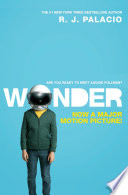
Wonder by R. J. Palacio

"A beautiful, funny, and sometimes sob-making story of quiet transformation." --The Wall Stree Journal

This story addresses issues experienced by a boy with facial abnormalities as well as the struggles of his sister as they both try to find their way in life.


Out of my Mind by Sharon Draper

"This book is beautifully crafted and written with understanding for those people who have disabilities." --The Guardian

This incredible book is about Melody, a highly intelligent girl with cerebral palsy.


We Are All Made of Molecules by Susan Nielsen

"This savvy, insightful take on the modern family makes for nearly nonstop laughs." --Kirkus Reviews

This humorous novel is upper MG, edging into YA in terms of the protagonists' ages - 13 and 14. It tackles disease, death, grief, and blending families.


Finding Perfect by Elly Swartz

"First-time author Swartz creates a clear, moving portrayal of obsessive-compulsive disorder through the authentic voice of middle schooler Molly Nathans." --Publishers Weekly

This compelling book explores the idea that perfection is attainable, showing OCD tendencies and life spinning out of control.


Rain Reign by Ann M. Martin

"It’s about love and fealty, fear, hope, the release from burdens, and what kids — all kids — need but often don’t get." --The New York Times

Rain Reign delves into the mind of a girl with Asperger's syndrome, illuminating her thought processes and revealing how frightening life can be when she needs to adapt to new situations.


Some Kind of Happiness by Claire Legend

"Sometimes stories are a means of survival...A layered, thoughtful exploration." --Kirkus Reviews


This book tackles depression and despair in a melding of real life and a mysterious fantasy kingdom, where hope and healing can emerge.


What are some of your favorite healing novels?

Monday, December 2, 2019

10 Lessons From a Decade on the Roller Coaster

With the decade drawing to a close, I'm seeing lots of 2009 vs 2019 selfies, and a number of tweets reflecting on changes, dreams, or achievements since 2009. Which got me thinking: I signed with my first agent in 2009, but (surprise, surprise) my writing life and career hasn't all been smooth sailing since then. The roller coaster, it seems, is a constant. But you know, over the past decade, I've learned to be okay with the roller coaster, and even to enjoy the ride (mostly).

For my last post of the decade, here are ten lessons I've learned (and am still learning), and for me, they've made a huge difference in my well-being and productivity. Free bonus! Dog pictures, because why not? Dogs are awesome.

1. Write every day...or don't. You might've heard the idea that "real writers" must write every day without fail. If it works for you, great; absolutely draw up a schedule and stick to it. But as a shiftworker and mother of four, I was glad to discover that books can be written in 15-minute chunks of time at hockey arenas and swimming pools, in cafes and cluttered kitchens.

2. Write what you know...or what you want to know. Following that old "write you know" advice, I could easily get stalled, because hey, how much interesting stuff do I really know? But it turns out, my best writing often comes when I'm writing what I want to know--what makes me curious or fascinates me--and when I'm passionate about the topic or theme.

3. Set goals...but be flexible. I knew it was important to set realistic goals for the things that were actually in my control, but life happens (and some things are more important than writing, no matter how much we'd like to give priority to our writing time). When I stopped beating myself up and started giving myself a little grace, I was happier and healthier.

4. Listen to feedback...but trust your gut. This is something I'm still learning--to trust my instincts. It's tough. I need feedback, for sure (but there's definitely a "too many cooks" line I try not to cross). When the feedback is consistent, and when it resonates, it's easy. But when it doesn't resonate, trust your gut. The gut knows.

5. Write badly. I have a hard time setting aside the desire for my words to be good, but oh, it's so freeing when I'm able to take the pressure off. Creativity flourishes when we give ourselves permission to write badly, even to fail. So maybe, don't take your work too seriously.

6. Write well. Write a lot. Rewrite. Study craft. Keep getting better. Keep reaching for your personal best. Keep stretching yourself creatively. (Those stories that feel daunting and beyond your abilities? See #5 above, and write those stories.)

7. Use whatever tools get the job done. Try all the "hacks" and embrace whatever helps: drafting in comic sans, writing longhand in colorful ink, building playlists, Scrivener, Word, yellow legal pads in cafes. (I've discovered that cheap notebooks and expensive pens make the perfect combo for me, for brainstorming and free-writing.) If you get stuck, mix it up -- a change of scenery, a switch to longhand, working on a different scene or project. Whatever it takes.

8. Write the next thing. In this industry, there will always be more waiting. And the waiting often ends in rejection. So when you finish one thing, start the next thing. For me, focusing on a shiny new project makes me less invested in the old project, which both takes my mind off the wait and lessens the blow if it does end in rejection.

9. Find your people. I'm so thankful for my community of writing friends. Can't imagine riding this roller coaster without them! We need people who "get" us, and who understand the challenges of writing and publishing. Encourage, and be encouraged; support, and be supported. Find your people.


10. Hang onto joy. A while back, I decided if there was no joy in the writing, it wasn't worth it. Creativity should be fun. We need to play, to make the things our heart wants to make, to find our worth and our joy within us, rather than having it all hinge on things that are largely out of our control. Remember what you love about writing, and nurture that.

So that's what I've been learning this past decade. Maybe you can relate to a few of these things, or maybe some will offer a bit of help or encouragement as you step into a new year--and a new decade--of life as a writer.

What lessons or truths about the writing life have you discovered over the past years?

Happy writing...


Wednesday, November 27, 2019

GIVEAWAY - Charlie Hernandez and the League of Shadows + Charlie Hernández and the Castle of Bones

Today we have an awesome giveaway of a signed hardcover copy of Charlie Hernández and the Castle of Bones, and a signed paperback copy of Charlie Hernandez and the League of Shadows.


A perfect pick for kids who love Rick Riordan.” —Booklist (starred review)

“A winner for all kids, but it will be especially loved by Latinx and Hispanic families.” —Kirkus Reviews (starred review)

The Lightning Thief meets the Story Thieves series in this middle grade fantasy inspired by Hispanic folklore, legends, and myths from the Iberian Peninsula and Central and South America.

Charlie Hernández has always been proud of his Latin American heritage. He loves the culture, the art, and especially the myths. Thanks to his abuela’s stories, Charlie possesses an almost encyclopedic knowledge of the monsters and ghouls who have spent the last five hundred years haunting the imaginations of children all across the Iberian Peninsula, as well as Central and South America. And even though his grandmother sometimes hinted that the tales might be more than mere myth, Charlie’s always been a pragmatist. Even barely out of diapers, he knew the stories were just make-believe—nothing more than intricately woven fables meant to keep little kids from misbehaving.

But when Charlie begins to experience freaky bodily manifestations—ones all too similar to those described by his grandma in his favorite legend—he is suddenly swept up in a world where the mythical beings he’s spent his entire life hearing about seem to be walking straight out of the pages of Hispanic folklore and into his life. And even stranger, they seem to know more about him than he knows about himself.

Soon, Charlie finds himself in the middle of an ancient battle between La Liga, a secret society of legendary mythological beings sworn to protect the Land of the Living, and La Mano Peluda (a.k.a. the Hairy Hand), a cabal of evil spirits determined to rule mankind. With only the help of his lifelong crush, Violet Rey, and his grandmother’s stories to guide him, Charlie must navigate a world where monsters and brujas rule and things he couldn’t possibly imagine go bump in the night. That is, if he has any hope of discovering what’s happening to him and saving his missing parents (oh, and maybe even the world).

No pressure, muchacho.


Inspired by Hispanic folklore, legends, and myths from the Iberian Peninsula and Central and South America, this bold sequel to Charlie Hernández & the League of Shadows, which Booklist called “a perfect pick for kids who love Rick Riordan” in a starred review, follows Charlie as he continues on his quest to embrace his morphling identity.

Charlie Hernandez still likes to think of himself as a normal kid. But what’s normal about being a demon-slaying preteen with an encyclopedic knowledge of Hispanic and Latino mythology who can partially manifest nearly any animal trait found in nature? Well, not much. But, Charlie believes he can get used to this new “normal,” because being able to sprout wings or morph fins is pretty cool.

But there is a downside: it means having to constantly watch his back for La Mano Peluda’s sinister schemes. And when the leader of La Liga, the Witch Queen Jo herself, is suddenly kidnapped, Charlie’s sure they’re at it again.

Determined to save the queen and keep La Liga’s alliances intact, Charlie and his good friend Violet Rey embark on a perilous journey to track down her captors. As Charlie and Violet are drawn deeper into a world of monstruos and magia they are soon left with more questions than answers—like, why do they keep hearing rumors of dead men walking, and why is Charlie suddenly having visions of an ancient evil: a necromancer priest who’s been dead for more than five centuries?

Charlie’s abuela once told him that when dead men walk, the living run in fear. And Charlie’s about to learn the truth of that—the hard way.


Ryan Calejo was born and raised in south Florida. He graduated from the University of Miami with a BA. He’s been invited to join both the National Society of Collegiate Scholars and the Golden Key International Honour Society. He teaches swimming to elementary school students, chess to middle school students, and writing to high school students. Having been born into a family of immigrants and growing up in the so-called “Capital of Latin America,” Ryan knows the importance of diversity in our communities and is passionate about writing books that children of all ethnicities can relate to. His first novel was Charlie Hernández & the League of Shadows.


a Rafflecopter giveaway


Monday, November 25, 2019

Cover Reveal -- THE ARTIFACT HUNTERS by Janet Fox


KIM: Today, I’m thrilled to welcome Janet Fox to the spooky blog to reveal the cover of her new book, THE ARTIFACT HUNTERS! Welcome!

JANET: Thank you, Kim!


KIM: Before we reveal that gorgeous cover, tell us more about the fantasy world that you started in your award-winning book, THE CHARMED CHILDREN OF ROOKSKILL CASTLE.

JANET: CHARMED CHILDREN is set early in World War 2, during the London blitz of fall 1940. Kat Bateson and her younger brother and sister are sent out of London to a “school” in a Scottish castle, Rookskill. But as it turns out, the school is run by someone who is not what she seems, and the castle is a nightmarish place of strange noises, dark hallways, and ghostly children. German spies, enigma machines, and ancient spooky magic all play a part. Practical Kat must uncover what’s going on – and discover her own power – before it’s too late.

KIM: What should readers of CHARMED CHILDREN expect from your latest book?

JANET: THE ARTIFACT HUNTERS is told from a new character’s point of view, a Czech Jewish boy named Isaac Wolf, who is sent abruptly from Prague to Scotland by his parents. This story again takes place in Rookskill, but it’s now 1942, and things in the castle have changed. Kat is still there with a small handful of the children who are now members of the Special Alternative Intelligence Unit of MI 6, using their developing magical skills to help win the war. But Isaac is being chased for reasons he doesn’t understand, and he must enlist the help of his new friends and call on his internal strength to avoid a dreadful dark magical threat, while acquiring a skill and responsibility that will aid the SAIU.

KIM: Now it’s time for the big reveal…here it goes…drumroll please!

Wait for it.

Okay.

Here.

It.

Comes.


KIM: What was your first response when you saw the cover created by the wonderful Jen Bricking? Can you give us any secrets about the illustration process?

JANET: I had very little to do with the process, but I’m delighted with the cover. It’s very different from the CHARMED CHILDREN cover, which is much more mysterious and sophisticated, but the ARTIFACT HUNTERS cover does create that magical aura, with four of the children and a number of mysterious artifacts, and an image of the antagonist – who is really creepy. I love how appealing it is – the brilliant colors, the spooky aspects, because it raises so many questions that I hope will spur readers to seek answers. I especially love how the kids look so much like I thought. I think it will attract a new group of readers to the series.

KIM: We meet several dastardly villains in THE ARTIFACT HUNTERS. What is your process for creating such deliciously evil souls?

JANET: Oh, thanks for that! I think the most important thing to know about a villain is that he or she truly believes they are the hero of the story. What they do is, by their account, right. It might be “right” because it satisfies a personal need, or it might be “right” because it speaks to a larger need, but the villain never would admit that they are doing what is “wrong”. I think this kind of nuance helps readers assess their own actions and the actions of others, and that adds a layer of complexity. Plus, I really love writing creepy villains who send shivers up the spine.

KIM: What are three fun tidbits from THE ARTIFACT HUNTERS that readers may not be expecting?

JANET: They should look for the dragon, shapeshifting, and I’d love it if readers would discover all the magical artifacts that I reference – and send me their own ideas for magical artifacts. Their ideas might find a place in another book!

KIM: Thanks so much for stopping by Janet!

JANET: Thank you so much, Kim.


Janet Fox is an author, mom, outdoor enthusiast, and former teacher. She's been to the bottom of the ocean in a submersible, and had a brief fling with rock stardom. Her novels are written for children and young adults but have won her fans of all ages. Her most recent novel, THE CHARMED CHILDREN OF ROOKSKILL CASTLE, is a gothic middle grade fairy tale set in Scotland and has received a whole bunch of stars, and the lovely Crystal Kite Award. At the moment she's sporting blue and pink stripes in her hair. She lives in Bozeman, Montana. Find out more at www.janetsfox.com