Showing posts with label #character. Show all posts

Friday, June 18, 2021

Jacking Up the Excitement in your Middle Grade Novel

I'm writing from Puerto Vallarta today. Taking out a little time to blog during my family vacation. Don't worry, I won't bore you with candid shots of my kids learning to surf or grisly descriptions of what happens when you jump off a board onto spiny sea urchins. It's not pretty. We'll leave it at that.

Instead, let's take a bite out of jackfruit. 

What does jackfruit have to do with writing riveting novels? Well, let me explain. 

Jackfruit is a huge warty green fruit. It's kind of melon looking, if your melons were aliens or perhaps were exposed to some sort of virus. It's not melon-y at all inside. I've never seen one before yesterday. Honestly, I was super excited to try it. I'm a bit of a foodie and I love adventure, so why not try eating something that looks like a science experiment gone wrong? The guides loved it. What did I have to lose?

A few bucks, apparently. But I gained oh, so much in experience, right?

Not only does the jackfruit look strange but the rubbery pit-filled flesh (promised to be a tantalizing blend of banana, cantaloupe, and pineapple) turned out to be........bland. I could only manage a bite. 

Back at the hotel, I tried blending it into a smoothie. I was greeted with a less-than-enthusiastic shrug from the family and something that sounded a little like "Mmph." Mmmmm was more what I was hoping for.

This brings me back to the point of this post - jacking up the excitement.

Anything you write needs to have a unique, intriguing presentation. No doubt the jackfruit did. I haven't seen that many warts since Halloween. And the chartreuse hue definitely grabbed my attention. 

But as with the fruit, presentation isn't enough. Even if some locals (family and friends) love your novel, you probably want to extend your appeal a little farther than that. And let's face it, no one really wants something bland. 

So here's some tips for writing a compelling novel that lives up to its hype.

Craft a Tight Plot


Include the basic elements of plot in your story. Free write all you want to get the juices going. But it's useful to have some idea of where you are in terms of plot. Some writers do this through structured planning such as outlining. Others prefer to "pants it," writing by the seat of the their pants, or on the fly, with little or no planning at all. Whatever your process, be sure to include these vital elements of plot.
  1. Exposition - this is the basic setup, where you develop enough character and world building to grab the readers attention and introduce them to the world of your novel. This is the period prior to the inciting incident.
  2. Inciting incident - this is the event that sets the novel in motion, the life-changing thing that happens that propels your character on their journey. 
  3. Rising Action - this is when your main character attempts to solve problems and overcome obstacles. This is where twists and turns should happen.
  4. Climax/Turning Point - This is the darkest moment, often referred to as the all-is-lost moment. Your character must confront the dragon and face their own weaknesses at the same time. This is when the most intense character transformation occurs.
  5. Resolution - The problem resolves and the character and their world return to normal, but it is a new normal, incorporating changes to the main character and their world. This often includes personal growth and new understanding of life and the world around them.

Create Relatable Characters


In order to be relatable each main character needs backstory, hobbies, interests, even conflicting opinions. I'm not talking about conflict between characters here, but conflict within a single character, much like we experience ourselves. 

Of course, conflict between characters is vital as well, even between allies. No one gets along perfectly all the time, not even the best of friends. Check your novel to make sure there's enough conflict and tension or your readers will find the relationships unrealistic and, dare I say it, bland.

Characters also need to have weaknesses. There's nothing more relatable than weakness and vulnerability, because we all experiences that, too.

Layer in Imagery and Metaphor


Once you finish your first draft, take a blazing fast read through of your novel. Look for imagery and themes you have included, whether on purpose or by accident. Then intensify these themes. Look for opportunities to add meaning through imagery and metaphor. This will add interest and depth to your novel.

Edit Out Fluff


It's tempting to include flowery adverbs or adjectives. But these actually detract from compelling writing. So does too much information. Consider the following sentences:

Jack clumsily walked too close to a really huge rocky ledge then fell off, screaming and hollering all the way down.

OR

Jack stumbled off a cliff.

Which one makes your heart jump? Which one makes you want to turn the page to find out what happened next?

DISCLAIMER: This post is not anti-Jack or anti-jackfruit. The author acknowledges that while jackfruit may not be to her taste, there are likely people around the world who find it delicious, and quite possibly even riveting. Just like with books....taste varies :)

Happy Reading and Happy Writing!


Saturday, January 30, 2021

How (and Why!) to Dress Your Characters

As your characters wend their way through their novel, bravely facing the obstacles you throw at them, you may ask yourself - what should they wear? And does it really matter?

Well, yes, it does. And here's why. You can pack a ton of information into your characters' wardrobe, from backstory to mood to carefully placed plots elements. Plus, in real life, people wear clothes. Don't neglect this important part of setting and characterization.

Setting, you may ask? How in the world can clothes influence the setting of a book? J. K. Rowling's Harry Potter series is an excellent example of this. Without the wizard robes and pointed hats, Hogwarts would be a very different place indeed. 

Uniforms with Purpose


Uniforms serve several functions in story writing. They provide the reader immediate clues about what type of story and world they've entered. A book packed with characters in army clothes will be quite different from one featuring ball gowns.

Uniforms can create unity among characters and highlight differences between groups. This is also clear in the Harry Potter books where Muggles dress very much like you and I but wizards cannot seem to figure out the intricacies of normal Muggle attire. Rowling also uses the standard wizarding world uniform to accentuate the times Harry and the other characters are away from the magical setting. 

Uniforms can also provide simplicity for both the reader and the writer, who won't need to rack their brains for distinctive, character-consistent outfits. Instead, small differences between similarly dressed characters can reveal their traits and mood. A rumpled outfit vs. a sleek, well-maintained one. 

Again in Harry Potter, Lupin's shabby robes reveal a great deal about his backstory, while Professor Lockhart's garish ones accentuate his narcissism. Ron Weasley's ancient dress robes contrast with Harry's new ones, highlighting Ron's poverty and providing an opportunity to show how each boy feels about it. Even Parvati Patil's butterfly hair clip - not the standard dress code - gives us information about who she is in contrast to those around her.

Dressing for the Weather


Casting characters in big bulky coats versus shorts or swimsuits establishes the type of weather and climate they are in. If they are missing a much-needed coat or sunhat, that creates potential problems for the character to work through. Similarly, when a character chooses a bright yellow raincoat, are they shaking their fist at mother nature, expressing a need for attention, or simply choosing from their limited options? The clothing begs the question. As the author, you decide how much to answer.

When dressing your character, consider how the weather changes throughout the day in your setting. Consider changes across weeks or months and adapt your characters' wardrobes accordingly. 

Clothing Sets the Mood


Perhaps you've heard the phrase, "Let me slip into something more comfortable," often given with a wink and a sly grin. There's no doubt that clothes set the mood for a given situation. Clothing choices often indicate characters' hopes or their anticipation of how the day may progress. They can also reflect characters' moods or their attempts to disguise how they really feel. Clothing can indicate the general mood of a place, like the gray clothes often featured in stories about orphanages.

Time and Fashion

Here's a few examples:
The Chronicles of Narnia by C. S. Lewis features girls wearing dresses, typical of 1940s England.


Ender's Game by Orson Scott Card features characters wearing futuristic battle gear.


The Lightning Thief by Rick Riordan dresses its characters in modern clothes.

Clothing Reveals Character

We've all heard it before, you can't judge a book by it's cover. This is meant to prevent hasty, ill-informed opinion making. However, as an author, you can use clothing to reveal a lot about your character. Or lack of clothing - consider The Emperor's New Clothes. 

Cassandra Clare, author of The Mortal Instruments series and its many spinoffs, uses fashion to great effect. Her descriptions of clothing and accessories is so seamlessly woven into the story (pun intended!)
that it doesn't slow the momentum. Instead, it becomes part of what the reader looks forward to enjoying. In the list below, note the contrasting traits that are revealed by the clothing of each character.
Isabel - long dresses, tight clothes, high heels, and an electrum whip wound around her arm
Clary - jeans and tennis shoes, T-shirts or tank tops, a backpack
Alec - dark clothes, including old sweaters
Magnus - flashy clothes with sequins, leather, and plenty of glitter

Whatever your story, put some thought and effort into dressing your characters. Your readers will thank you!


Friday, February 14, 2020

4 Essential Tips for Developing Character Backstory

Know Your Characters, Know Their History

We often know our characters' personality traits, darkest secrets, and greatest hopes. But do we know the why behind it all? Do we know what shaped them to become the characters we are now going to torment through a novel, and maybe entire series, until they grow and develop into the shining people we all hope we can become? 

Or devolve into something we sincerely hope we will never meet. It's up to you. They're your characters, after all. Either way, knowing their background as you write will enrich the story you produce and make it real for readers.

Recently I was asked to write a history for the women's group of my local church. Just a 1-year history, highlighting important events and changes among our group. At first, I dreaded the job. But once I got started, sorting through old facebook posts and digging into the depths of my memory -  (Did anything happen last April??) - I found the process a blast.

What's more, it got me thinking. This could be a fun and extremely useful way to develop characters for novels. 

1. Break Your Characters' History into Meaningful Chunks.

Depending on the age of the character you are focusing on, this could be months, years, or decades. Honestly, it could even be days or weeks. The reason for this is that we are not simply splitting the character's life into equal chunks of time. Instead, we want to develop a history of life experiences that matter. Several could occur within one day. More often, they are spread over larger periods.

Once you've split your character's life into useful spans of time, dig into them. Each period is like a micro-story. If you decide to go deep in exploring backstory, be sure to also write a short one or two sentence summary of what happened and how it influenced your character. That way you can do a quick and easy review without needing to reread all the thousands of words you may write!


2. Ask Questions 

What significant events shaped this character's life? Which of these events is most relevant to their character arc in this novel? How would your character be different if one of the events didn't happen? What choices might this character make based on knowledge they gained through specific experiences? 

Have they lived in regions or cultures that are different from where they are in the current story? How does that affect their interactions with other characters?

What kind of baggage or damage does this characters carry due to things they've done or gone through? What exactly caused the dysfunctional thought processes or behaviors your character now struggles with? How did they deal with problems in the past? How are they different now? Who did they lean on? Who created difficulties for them? 

As you get started with exploring your character's history, other meaningful question specific to your novel will arise. This is a very useful exercise, especially if you are stuck on a plot point.

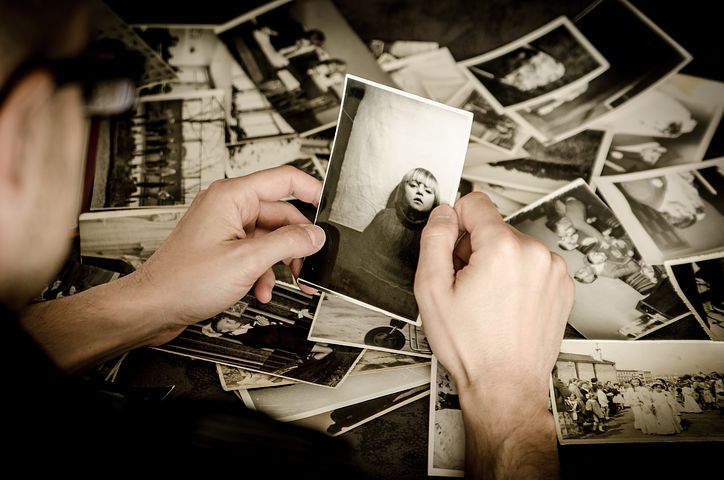
3. Import Pics

We all know a picture is worth a thousand words, right? Not only that, but photos can prompt ideas and storylines. So it's extremely useful to add photos to your character's history. Easier said than done, you may think. 

But honestly, there are endless sources for pics to spur your imagination. Keep in mind that unless you plan to publish, pin or blog the history you're creating, you don't need to worry about whether the images you choose are copyrighted. They are for your eyes only, sitting quietly in your notes, inspiring you. Search google images. There are tons. 

If you think you might want to share this history someday, choose photos from pixabay, Pablo, or Wikimedia Commons. Another useful approach is to create a pinterest page (here's mine!) where you pin images that remind you of your character, their life experiences, or the environments where they have lived. 

4. Organize Your History

You can create your history in a simple word document, evernote, or my favorite for storytelling - scrivener. If you use scrivener for writing, you can also have instant access to the history you create for each character. 

I love to keep my research, character details, plot organization, and backstory writing handy while I'm writing my novels. Scrivener provides a great way to have easy access to this information. However, if you use scrivener, be sure to compress your pics or the app will bog down. Another option is to import links to webpages.

Whatever format you choose, you can organize each character's history by breaking it up into the time periods you've chosen, exploring meaningful questions, and adding photos for the character at different times in their life as well as photos for significant life experiences.

What are some of your favorite strategies for developing character backstory?


Friday, September 7, 2018

What's on YOUR dresser: Discovering and Revealing Character Secrets


Characters have secrets. Writers know it. Readers know it. And both are on a mission to uncover the dark (or glorious!) truths of our favorite characters. Readers find out by, well, reading. For writers, the process can be a bit more complicated.


Trait lists can be a useful way to start fleshing out your characters. Here's a great list from Writer's Digest. Once you've filled out a character fact sheet like this one, you know a lot more about your character, their personality, relationships, and motivations.

But sometimes we get stumped. Either our plots tangles up or we just can't quite fathom why a character won't do what we had carefully planned on them doing. This is a great time to dig a little deeper.


Here's a fun tool to help you with your digging. I like to call it "What's on YOUR Dresser?"


I know, what's a messy dresser got to do with your character? Well, let me show you. By the end of this exercise, you'll know tons more about your character and will have a new handy tool to use in future brainstorming! This can also be adapted to cultures and situations that have no dressers, of course. Here's how it works.

  1.  Imagery portion: Close your eyes. Imagine a dresser in your character's room. What is the dresser like? Imagine the color and style. Put yourself in that room and see what is on the dresser. Is the dresser tidy or haphazard? Let your mind drift across the dresser. What is propped against it? Is there anything hanging from the mirror? Relax and let details sift to the surface. Are the drawers open or closed? What sounds do you hear in the room? What do you smell? Is it warm or cool? What other details do these sensations bring to your mind?
  2. Writing portion: Now, write like mad, recording every detail you came up with while using the imagery portion of this exercise. Don't edit yourself. Just write. More details may surface as you record the information you've already discovered.
  3. Analysis and Brainstorming portion: This is the fun part. Now you get to look at your list (or  you could even make a sketch!) and contemplate what it means. What do these details reveal about your character's personality? What can you learn about their history, their relationships, their hobbies? What misleading clues can the dresser details provide? (Devious, I know.) Let's give it a try using the dresser pic from above.
A quick glance at this dresser (and yes, it's mine - don't judge 😆). Anyways, a quick glance at this dresser reveals a lot about personality. Let's examine it as if this were a character in a story. This dresser is cluttered, yet includes a sign that says "simplify." So there's some inherent conflict in this character already.

Several items refer to faith or God (a journal and a plaque), so this character probably espouses some sort of religious beliefs. They are also clearly a fan of Harry Potter, so she probably doesn't attend a church that opposes magic in children's stories.

There's several photos, probably family. Also a wedding pic. Is that recent? Or is it a continued celebration of a happy marriage? Or has the other spouse died? Good questions. You can see how the objects on the dresser can encourage you to dig deeper into your character and their life.

What does the folded laundry and the vacuum by the dresser tell you? Does the character live in a small space or can she just not be bothered with putting things away. (If you guessed the latter, you'd be correct! But you probably already figured that out by all the clutter on the dresser.)

Speaking of the clutter, what types of objects are they? Here's some closeups.


We already mentioned the photos. There's also love notes from two children, a card, children's books, and lots of crafts. This character is probably sentimental and creative. But there's also a pile of papers, which indicates a bit of disorganization.


You may also have noticed the two wine bottles along with the Alcoholics Anonymous Big Book (the blue one) as well as the Serenity Prayer tucked in the side of the mirror (also a part of AA). Hmmm...what could that tell us? Maybe this character loves wine or struggles with alcoholism. Or is family to an alcoholic.

This is a great example of misleading clues. There are good reasons why these objects are on my dresser. But I've never drank. And I'm not family to any alcoholics. Despite this fact, both those wine bottles, the book, and the prayer have deep meaning for me.

Situations like this are excellent examples of how objects in your character's life can completely mislead readers. Until you reveal the full truth, of course. In this case, one wine bottle I received when my grandfather died. He'd bottled his own cranberry wine when he was younger. The other was from the champagne toast my parents made when they learned Mom was pregnant with me. Yep, sentimental. The AA literature? Well, let's just say there's a ton of uses for 12 step programs and I highly recommend them.

Every object in your character's life has a history of its own. The objects you choose to include should illuminate your character or advance your story.

We could dig deeper into the clutter on my dresser - a bunch of eclipse glasses, porcelain hearts, a tiny ghost, a miniature handcrafted barge. I know what all these mean and why they are there. The same with the beads and whale tail hanging on the mirror.

But you get the point. Use this exercise and you will find untold treasures in your character's past and present. And you just might figure out why they won't do what you want! New plot avenues and potential red herrings will present themselves to your imagination, enriching your storytelling.

And don't forget, you can easily adapt this exercise to characters without dressers. What's in their backpack? Or under their bed? Or in their three-dimensional purse? Whatever you find, enjoy the process!