Monday, December 14, 2015

The Waiting Game

Publishing is a lot of waiting.

Waiting to hear back from critique partners.
Waiting to get responses on queries
Waiting to get responses on requested materials
Waiting to get responses when on submission
Waiting for cover designs
Waiting for releases
Waiting Waiting Waiting

So much time spent waiting. And so many parts of the process are out of our control. And even worse the time spent waiting is often for a response we don't want to hear.
I'm not going to lie, it's not easy and I don't have all the answers. I struggle with all the waiting. I get it, agents, editors, and industry professionals are busy and as someone who is querying, I know clients come first. But it's hard to wait months and months and then get the response you are dreading.

So how do we stay positive and make the best us of all that time spent waiting?
I know people say work on the things you can control, i.e. your next project. But what happens when the thoughts of waiting cripple your ability to move onto something else and write something new?

Take a break
See some friends, catch up on TV, relax. You likely just finished a manuscript and spent a ton of time researching who to send it to so cut yourself some slack and take a load off.

Read a Book
Catch up on that to read pile. You know the one that's stacking up next to your bed? Make a dent in it. Reading can be relaxing and inspiring at the same time. Let someone else's stories sweep you away.

Do Research
Just because you feel like you can't write, doesn't mean you can't lay the ground work for a new story. Get lost in the research, it may inspire you to move forward with an idea.
Critique
Spend some time with your critique partners work. It will take you mind off things and help them at the same time. It's a win win.
Regardless the waiting game is hard. Give yourself a break. It's okay to lose it and get frustrated, but also use the time to recharge and find inspiration for your next project. Long and short perseverance pays off. Keep moving forward and don't let the waiting drag you down.

Friday, December 11, 2015

Listapalooza: Acclaimed 2015 MG!

2015 has been an incredible year for middle grade literature. There have been so many amazing middle grade books published, so many incredible stories that we got to savor and devour and share.

It's really been an embarrassment of riches and, honestly, sometimes a bit overwhelming. As an elementary teacher-librarian, as a dad of a middle grader, and as a middle grade author, I try to keep up with the industry, try to read as much of the best new middle grade as I can each year. Reading what's out there is the best way to keep your finger on the industry's pulse and the best way to reflect on your own craft and make it better. So, yeah, I try to keep up. But this year? I was adding books to my bedside to-read pile way faster than I could read them. So. Many. Great. Books.

So after a year like this, if someone wanted a quick list of the 2015 middle grade books they "should" read to keep up with the market, where would I possibly begin? (This is not hypothetical question, by the way...this blog post came about in part due to me being asked that actual question. Twice.)

Luckily, this is the time of year when all those website and publications and journals start announcing their "Best Of" lists. I know you've seen them. And, of course, I checked them out. What amazed me was how different they were...how some books were on some lists but not on others, and how some books might make one list but be totally left off all the others. In a year with so much great kid lit, there didn't seem to be any consensus on what the "best" middle grade books of the year really were.

So, I did some aggregating. I looked at five of the most circulated, reputable lists...from review journals (School Library Journal, Publishers Weekly, Kirkus),  from reader sites (Goodreads), and from the commercial market (Amazon). My original plan was to list here every book that made any of the lists...but to my amazement there was such little list overlap that I ended up with 51 different books from those five lists! Way too many to list. So, I narrowed my list down to just books that were featured on at least TWO of the lists.

And here they are. The 15 middle grade books of 2015 that made at least two of the "Best of the Year" lists. It's not perfect, but it's not a bad place to start if you're looking to sample the best of what 2015 had to offer the world of middle grade literature.

Important Note #1: I do feel kind of icky about boiling down the richness of kid lit to a list of lists. Please remember this was just kind of a playful exercise. There were tons of great books that made "only" one list, and tons of spectacular books that didn't make any list. Truly. So this is just for fun. Because you know what? The best middle grade book of 2015 was whichever one YOU liked the best.

Important Note #2: I included the list from a gigantic online retailer because they are a massive force in the market, but if you decide to purchase any of these fine books, I encourage you to buy them from your local indie bookstore. They are great places, staffed by great people, full of great books. I don't want them to go away.

Semi-Important Note #3: Just FYI, I put an asterisk by the books on this list that I have read (so far...I've got the rest waiting for me in that to-read pile, with 2016 already breathing down my neck!). If you're interested, you can take each of those asterisks as a recommendation; there's not a single one of them that I didn't totally dig.

Oh, and I'd love to see your comments! Which of these books were YOUR favorites? Which 2015 MG books would you add to this list?

So, here you go...the List of Lists of Best Middle Grade Books of 2015!

FOUR LISTS
Dial Books, 2015

The Thing About Jellyfish* (SCHOOL LIBRARY JOURNAL, AMAZON, GOODREADS, PUBLISHERS WEEKLY) by Ali Benjamin

The War that Saved My Life* (AMAZON, GOODREADS, PUBLISHERS WEEKLY, KIRKUS) by Kimberly Brubaker Bradley

George* (SCHOOL LIBRARY JOURNAL, GOODREADS, PUBLISHERS WEEKLY, KIRKUS) by Alex Gino


THREE LISTS


Nancy Paulsen Books, 2015
Lost in the Sun* (SCHOOL LIBRARY JOURNAL, AMAZON, PUBLISHERS WEEKLY) by Lisa Graff

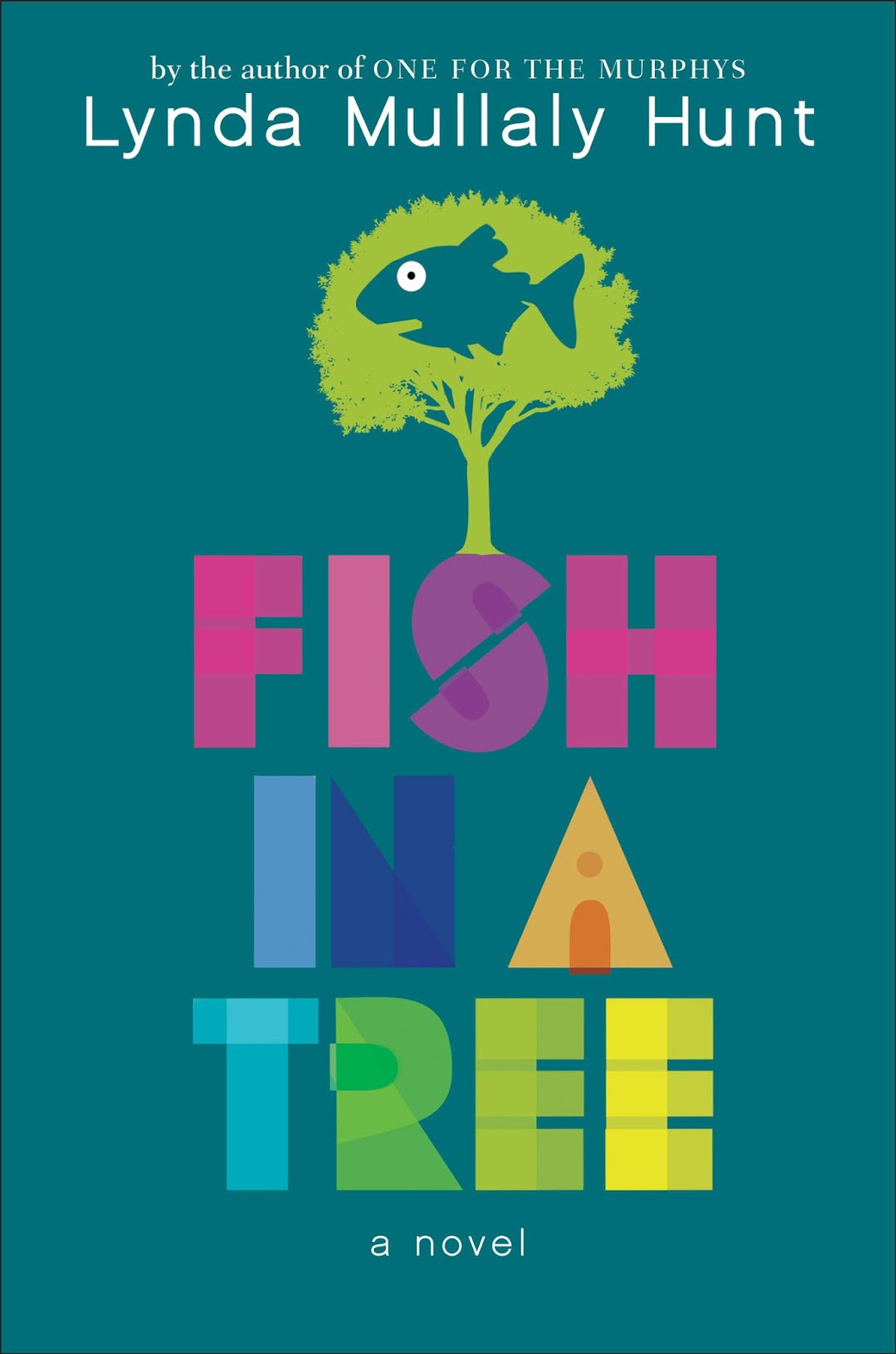
Fish In a Tree* (SCHOOL LIBRARY JOURNAL, AMAZON, GOODREADS) by Linda Mullaly Hunt

Roller Girl (SCHOOL LIBRARY JOURNAL, AMAZON, PUBLISHERS WEEKLY) by Victoria Jamieson

Unusual Chickens for the Exceptional Poultry Farmer* (SCHOOL LIBRARY JOURNAL, AMAZON, KIRKUS) by Kelly Jones, illus. by Katie Kath

The Nest* (SCHOOL LIBRARY JOURNAL, AMAZON, PUBLISHERS WEEKLY) by Kenneth Oppel, illus. by Jon Klassen

The Marvels (AMAZON, PUBLISHERS WEEKLY, KIRKUS) by Brian Selznick

Goodbye Stranger* (SCHOOL LIBRARY JOURNAL, AMAZON, PUBLISHERS WEEKLY) by Rebecca Stead

TWO LISTS

Scholastic Press, 2015

In the Footsteps of Crazy Horse* (SCHOOL LIBRARY JOURNAL, KIRKUS) by Joseph Marshall III

Echo* (AMAZON, PUBLISHERS WEEKLY) by Pam Munoz Ryan

Magnus Chase and the Gods of Asgard (AMAZON, GOODREADS) by Rick Riordan

Harriet the Invincible (PUBLISHERS WEEKLY, KIRKUS) by Ursula Vernon

Gone Crazy in Alabama* (SCHOOL LIBRARY JOURNAL, KIRKUS) by Rita Williams-­Garcia

Monday, November 30, 2015

NaNoWriMo Revisions: Be the Tortoise

Congratulations!

Today is the last day of November, which means you very well might have finished NaNoWriMo with a successful run of 50,000 or more words to your name. If not, perhaps you're going to use today as part of your homestretch strategy, and by the time your head hits the pillow tonight you'll have all of those words counted and verified, and you'll be the proud owner of a brand new 2015 social media badge to display! Or maybe you didn't reach the goal, which is also okay. If you gave it your best try and still found yourself with a new pile of words that you'll someday be able to mold into a viable manuscript, it can't really be said that you lost.

So what comes next? Designing mock-ups of what the book cover will eventually look like? Prepping your bio and head shot for the dust jacket? Trying to decide which of the agents in that whole level of the publishing realm will be the favored few to be included in your first round of querying?

No, no, no, no a thousand times no. If you're serious about this, all of those things, and really everything else that would go with them, need to be stored up on your dream shelf for the time being. Save them, and revisit them on occasion because dreams are awesome and they can keep you going through the frustrating times, but if you want a legitimate chance at seeing those dreams climb up to the next step, you're just getting started on your work.

So let's say you finished a new draft. The chances are good it probably needs a coat or two of polish before its ready to see the light of day. I know, I know -- it's brilliant, you love it, you're so proud of what you accomplished that you're about to burst. Believe me, I've been there, more than once. The thing is, you've been living and breathing and consumed by that story for thirty days now, and once you give your head a little time to clear and regain your bearings about how normal life works, you'll see there's still a good amount of work to be done. Once your able to approach your work with fresh eyes, it's time to start revising.

I'm not going to give you a long checklist of tips on the best way to meet your revision goals because each writer has a different process, and what works for some of us might be a nightmare of frustration for others. I am, however, going to recommend you follow one big step in the revision process (to be used following NaNoWriMo or really any other time you finish drafting a new manuscript) which I personally think is crucial for making it all work the best for you:

Wait.

Don't dive in and start revising right after you type out that satisfying "The End" tag. Let your head clear for a few weeks, or months. Give the work a little space to breathe. Taking some time away from it will let you approach it with more necessary objectivity when you return, and allow you to identify both what's working and what isn't. If you can, go ahead and get the draft in front of some critique partners while you're resting up, and really think about whatever feedback they provide.

For me, revising has never been about applying quick bandage-paragraphs to fix the things that don't work. I usually have to do a lot more than that, and when I travel deep into that revision rabbit hole (which is where I've been living for the past month) I put a lot of thought into making sure everything is going in the right direction. I'm not saying my planning is so regimentally mapped out ahead of time that it won't allow for discovery, but I want to make sure the writing has the best possible chance to grow into something better.

Think back to the Tortoise and the Hare. Do you want to be the writer who charges through this critical stage of the process, which can be so beneficial to your work, or do you want to be the one who invests the time it takes to do it right?

Trust me. Be the tortoise. It can make all the difference.

Monday, November 16, 2015

Synopsis /səˈnäpsəs/ (n). the bane of any writer's existence.

I tried NaNoWriMo once.

And I failed.

Miserably.

I started out writing between 1500-2000 words a day, and then somewhere around mid-November my brain became a stew of ideas and twists and new character arcs that sounded a heck of a lot better than the ones I'd started out with.
So since many of you are currently halfway through your own NaNo projects (imagine me applauding you at this point because I am, I promise), I thought I'd pass along what I learned from my month-long stint in a creative hell. 
The Super-Simple Synopsis Strategy Sure To Satisfy Your Storytelling...Stuff.
Don't judge me. Titles have never been my forte. 
Anyway, this strategy is going to be absolutely priceless for those of you who will be querying your newborn manuscript in January (imagine me hugging you and telling you it'll be okay at this point because I am, I promise) and hoping no agent you decide to query asks for a ONE PAGE SYNOPSIS OH MY GOD.
But we all know agents will. They have to. And after this post, you're going to be prepared to write one. All thanks to my TS-SSSSTSYS...S technique. 
It's really quite simple. I use it to teach writers of all ages how to write the world's most simple and complete synopsis. And all you have to remember are five words: somebody, wanted, but, so, then.
That's it! When you fill in the responses to those, you've got a full-blown synopsis that'll easily fit on one page. So let's take a look at each of these words so you'll know just what to include.
  1. Somebody: Tell us who the main character is, where she lives, her age, and anything else that you feel we should know.
  2. Wanted: Tell us your main character's biggest inner desire. What's her biggest external goal?
  3. But: Tell us the obstacle standing in her way of achieving these. There might be more than one or there could be one single challenge. This is going to be the biggest portion of your synopsis because we need to see how your character struggles and fails, struggles and fails, struggles and fails, and nearly gives up.
  4. So: Tell us the method she uses to finally overcome this obstacle.
  5. Then: Tell us the internal and external reward she obtains for solving this problem. 

That's it! As an example, we'll write up a quick (less than one page) synopsis for Bridge to Terabithia. Warning: major spoilers ahead if you haven't read the book.
  1. Somebody: Jess Aarons is a fifth grader at Lark Creek Elementary School. He's been training all summer long on his farm because...
  2. Wanted: he wants to be the fastest runner in the school. He knows if he can do this, he'll earn the respect of his friends, his rivals, and more importantly, the respect of his dad.
  3. But: But when Leslie Burke, Jess' new neighbor and classmate, challenges the boys to a race, she leaves every one of them in her dust...along with Jess' dreams. Second place isn't good enough to brag about. Not to the other boys at school. And not to his dad. When Leslie attempts to befriend Jess, he resists at first. But somewhere along the way, he realizes she's not so bad. And her family is more than ready to welcome him as their new neighbor. Jess and Leslie quickly become friends and together they create Terabithia, an imaginary world in the woods, just across the creek beside the old crab apple tree. The more time they spend building their castle stronghold, the more the other boys tease him about having a girlfriend. And the more time he spends with Leslie, the more his parents worry about him not doing regular "boy things." But Leslie brings out the best in Jess--his creativity, his curiosity, and his willingness to see a world outside of Lark Creek. And Jess inspires Leslie, too. She tells him she's never been to church, so when Easter rolls around, she tags along with his family. Jess worries that her lack of understanding about the Bible will come to haunt her one day, but he quickly forgets about it. Soon after, Ms. Edmunds, Jess' music teacher, invites him to visit an art gallery and Jess accepts the offer. They spend the day exploring the different paintings, talking about imagination, and enjoying their time in the city. But when Jess gets back home, his parents are waiting for him with some devastating news. Leslie is dead. She drowned trying to cross the creek into Terabithia. At first, Jess refuses to believe it. He becomes angry at his family, at himself, even at Leslie. He runs away to the woods, ready to tear down the world he created with Leslie. Jess' father finds him. Jess confesses that Leslie's death is his own fault because he didn't invite her to go to the art gallery with him. And what's even worse, since Leslie never went to church before Easter, he's worried God sent her to hell. 
  4. So: For the first time ever, Jess' dad consoles him. He tells Jess not to worry. That it's not his fault and that God doesn't send little girls to hell. They sit quietly together in the woods remembering Leslie and having their very first honest father-son moment. The next day, Jess finds the strength to revisit Terabithia. He decides to build a bridge across the creek and invite his little sister along.
  5. Then: Together, they will keep the memory of Leslie alive so that Terabithia can live on forever. 
There ya go! Obviously, the synopsis I just wrote can be modified and greatly improved, but it at least gives you the idea of how you can use the somebody, wanted, but, so, then method to at least get your started in the right direction.
But until then, happy writing! You're only halfway through November, so there's plenty of time to finish and worry about that synopsis (imagine me giving you plenty of caffeine and chocolate at this point because I am, I promise. Except for that donut. I'll take that.)

Monday, November 9, 2015

What I Learned from NaNoWriMo (even though it doesn’t work for me)

When I started the manuscript that would be the first one I would ever complete, NaNoWriMo was just around the corner. It seemed like a great opportunity to keep the momentum going on this book I was already excited about. What I didn’t realize until I dove head first in, was that Nano isn’t for everyone. Despite that I did learn some valuable lessons.

You’re not alone
Just because you didn’t finish NaNo, or even if you didn’t start, it doesn’t mean you’re the only person in existence that didn’t. I know it’s hard to be in the writing community in November when everyone is shouting about their word counts, but there are many people who are quiet about the fact that they aren’t making their daily goal or aren’t even participating. It may feel lonely, but you aren’t the only one. I’ll shout from the rooftops right now, I’m not NaNoing!!! So you can join my saying no to NaNo club if you want.

Writing every day doesn’t work for everyone
This was something I learned fairly quickly during NaNo. I simply didn’t have the emotional energy required, or the brain power to sit down and write every single day especially with a full time day job. Now this probably sounds like excuses but in all honesty I needed time to plot, and let ideas stew in my subconscious before things gelled together and I could write more. And not writing everyday doesn’t mean you are a failure, it just means it’s not the right method for you. That said, I did learn the importance of a schedule. When I had time to write scheduled out, I was a lot more effective and got things done.

The importance of momentum
The more frequently you write the more your head is in the game. This is why NaNo can be so effective because your brain is in your story every day. While I determined that writing every day was too much for me, between the fatigue and needing down time, I did notice an increase in ideas and excitement to continue my story even on the days I wasn't writing. So once you find that momentum from whatever schedule works for you, keep it going.

Capitalize on the energy
The energy during NaNo is electric (boogey-woogie-woogie *sorry couldn’t resist*). Everyone is excited about their stories, and running word sprints. Even if you aren’t participating in NaNo, jump in on some word sprints or let the excitement grab you and take you down the path. You may not be writing 50k in a month, but you can still work on your manuscript.

Not reaching 50k in a month doesn’t make you a failure
Did you put words on the page? More than you started with? If the answer is yes and yes, then congrats you won. You added words to the page and that is the most important part of drafting. And even if you didn’t get 50K or finish your book, you did make progress. And now you have momentum and time to finish it. So keep going.

Even if NaNoWrimo doesn’t work for you, I hope you are at least able to find some value from it. Keep moving forward, persevere and finish! You can do it!

Monday, October 26, 2015

How NaNoWriMo Made Me a Better Writer

I’ve participated in National Novel Writing Month (aka NaNoWriMo) every November going back to 2008 (even though I’ve recently decided to remain on the sidelines for this year). For anyone not familiar with this event, people commit to putting forth their best effort to write an entire novel in a thirty-day span. If you reach that goal and report your word count to the NaNoWriMo website for verification, congratulations! You’ve won!

Producing that many words so quickly might seem like a daunting task, at the very least, but I promise it can be done. I’m seven-for-seven on NaNoWriMo wins myself, so I’m living proof. I’m not saying everything from those collective 350,000+ words has been brilliant, but I’ve managed to drag my tired bones across the finish line every time I started, and each of those wins was very satisfying.

Some people would probably tell you that’s half (or all) of the fun in participating — diving in head first with your eyes closed, writing with a process that isn’t even in the same area code as your comfort zone, and discovering if you really can meet that goal. I suppose those things are true, but I think a much bigger take-away from NaNoWriMo has been what I’ve learned about myself as a writer, and not just how I operate under the self-imposed pressure of a month-long sprint. 

I think anyone who decides to accept that challenge and manages to learn something about themselves or their process, whether they “win” or not, can say the experience was valuable and worthwhile. If you’ve never taken on the challenge before, I’d certainly encourage you to try. And if you do, here are a few bits of advice I have to offer: 

Set the Stage
A lot of writers create playlists to listen to for writing certain scenes, specific characters, or for entire projects. Anything that will help you find your way into the story more quickly is a useful tool. For a lot of us, that’s finding the right music to establish the scene, or define the character, or complement the entire book. If you aren’t a music fan, maybe you need the right drink, or the lucky sweatshirt, or perhaps a collection of various scented candles that perfectly reflects the personalities of your characters. Whatever gets you where you need to be is worth cultivating.

Find the Clay
I’d imagine some people might disagree with me on this, but I think writer’s block is a self-indulgent excuse for not getting words on the page. During NaNoWriMo, it’s not a luxury you have if you want to reach the goal. If you decide to make it a priority, you WILL find a way to build your word count. I tend to see writing a first draft as something similar to a sculptor getting her or his hands onto a nice new slab of clay, and all of the editing and revising that follows is when the artist molds that clay into the figure they carry in their head. You can’t sculpt until you have the clay. You can’t revise until you have the original words. No matter how tragically awful those words might seem at first, you need to give yourself something to work with.

Freeze the Lake
Forget chronology. You don’t have to start with “It was a dark and stormy night” on November 1st and finish with “They lived happily ever after” on the 30th. Write whatever part of the story is poking at you the most. I’ve described my NaNoWriMo process (which has really evolved into just being my process now) to non-writers by comparing it to how a lake freezes over in the winter: Big frozen chunks and ice floes begin forming independently of each other in the cold water until everything eventually comes together as one big sheet covering the lake. I’ll write the scenes that have the most energy, then let the gaps between them fill in along the way as those bigger scenes naturally develop outward until they connect. 

Work the Community
Writing is solitary. No news there. But encouragement can be motivating, and the writing community is (especially here in middle grade territory) very supportive. NaNoWriMo has different levels of social networking built into it, like writing buddies, online forums, and even local real-world events. You don’t have to go through it all alone.

Use the Tease
Try to end your writing day at a place when you would really like to keep going. That will make getting back to work the following day something to anticipate.

Ride the Flow
I hope a lot of writers out there are familiar with flow state, that mindset when everything feels effortless and your productivity is off the charts. You’re going to put in some serious hours if you want to write 50,000 words in a month, and sooner or later the flow is going to grab you. Try to recognize when it does, and take advantage of it for as long as you possibly can.

Take the Punches
Not every day will be golden and full of word count. This is okay. Remember that 1,667 words is an average daily pace and not a requirement. As long as you keep moving forward, you’re still approaching the goal. If a day doesn’t turn out to be a good one, take your hits and move on.

And Finally, Make the Effort
One month is plenty of time to accomplish some great things if you set your mind to it. The manuscript that first caught my agent’s attention began as a NaNoWriMo project, and I know I’m far from the only writer (or even the only Middle Grade Minded contributor) who can make that claim. Some of the bigger regrets in life come from the things we never dared to try. The worst thing that could possibly happen would be that you wouldn’t reach the goal, but would still walk away with some new ideas. 


Where’s the downside?

Friday, October 23, 2015

On Your Marks, Get Set…

I looked at my calendar today and got a little excited.

Well, no, actually, first I picked my lower teeth up off the floor, because that’s where my jaw shot when I accepted the horrifying truth that it’s somehow October 23rd, 2015 even though January 1st, 2015 was, like, two weeks ago (I’m pretty sure).

For real, where did my year go?

Anyway, after that, I got excited.  Not quite night-before-Christmas excited, but more about-to-get-on-a-rollercoaster excited. IT was that sense of nervous butterflies tickling the belly even as the heart picks up speed in the anticipation of something possibly, maybe awesome about to happen.

That is, something awesome is about to happen. First, Halloween. And if you don’t see the potential for a million and one delightfully creepy, crawly, sinister and scary MG stories being born of holiday that revolves around the dead walking the earth at the same time 90% of a community’s children are out begging for candy in masks and makeup, well, that makes me a little sad for you. You probably never love Goosebumps, either, did you?

But I digress. It’s after Halloween, see, that the real fun begins. Because on November 1st, millions of writers – pro and amateur alike – will slam down the gas pedal and surge out of the gate on another insane National Novel Writing Month. That’s NaNoWriMo to you and me, Russ. And, yes, I’ve gone on and on about this before – including why I think NaNo is extremely well-suited for Middle Grade writing – so I’ll spare you the recap*.

Today’s point is this: as writers considering NaNoWriMo, we find ourselves standing at the edge of a cliff dive down into the gully of 50,000 words worth of novel-drafting. Which begs the question: are you bungee jumping or throwing caution (and some would say sense) to the wind by going for it damn-the-torpedoes, full speed ahead? That is, do you plan and scheme, plot and outline ahead of time, using October to draw up character profiles and imagine scenes with the care of a model-maker sketching out a diorama before gathering up a shoe box, glue, and a set of pipe cleaners and setting to work?

Or do you just…jump off?

Myself? This year? I’m a jumper. I will, at some during this last week of October, settle on a basic idea for the book I intend to NaNoTackle™.  After that, I might even go so far as to name the protagonist, if I’m feeling, you know, frisky. But that’s it. No plotting. No outlining. Just November 1st, an opening sentence, and a drive to see where this manuscript takes me.

Sounds crazy?

Yeah, it kind of is.

Fact is, NaNoWriMo is the one time in the previous or future 12 months that I’ll approach writing this way. The rest of time I’ll drafting with sense and caution, by making sure I have a good idea of where I want to go before I put the keys into the ignition.

But it seems to me that if we always do the same things the same ways, we’re likely to usually get the same kind of results.  And that’s fine if you’re making cars on an assembly line. But that’s not what we’re doing. We write stories for middle graders, a group that’s mostly defined by constantly trying new ways in the interest of learning more about themselves and the world they live in.

So maybe join me this year? Put down your color-coded outline cards and set aside your character sheets. Take off your parachute and/or that bungee cord, step up the edge of the cliff, and take the headfirst plunge with me into the Great Word Void this November. Sure, it might not work for you. Might not work for me, either. But there’s a always fantastic rush in finding out.  And at the end of the month, “win” or “lose”, we’ll have some words written that we didn’t have before, and hopefully we’ll have learned a little something new about ourselves.

And isn’t that kind of the whole point of middle grade?

Pud’n


*Click that link. Click it! Cliiiiiiick it!